
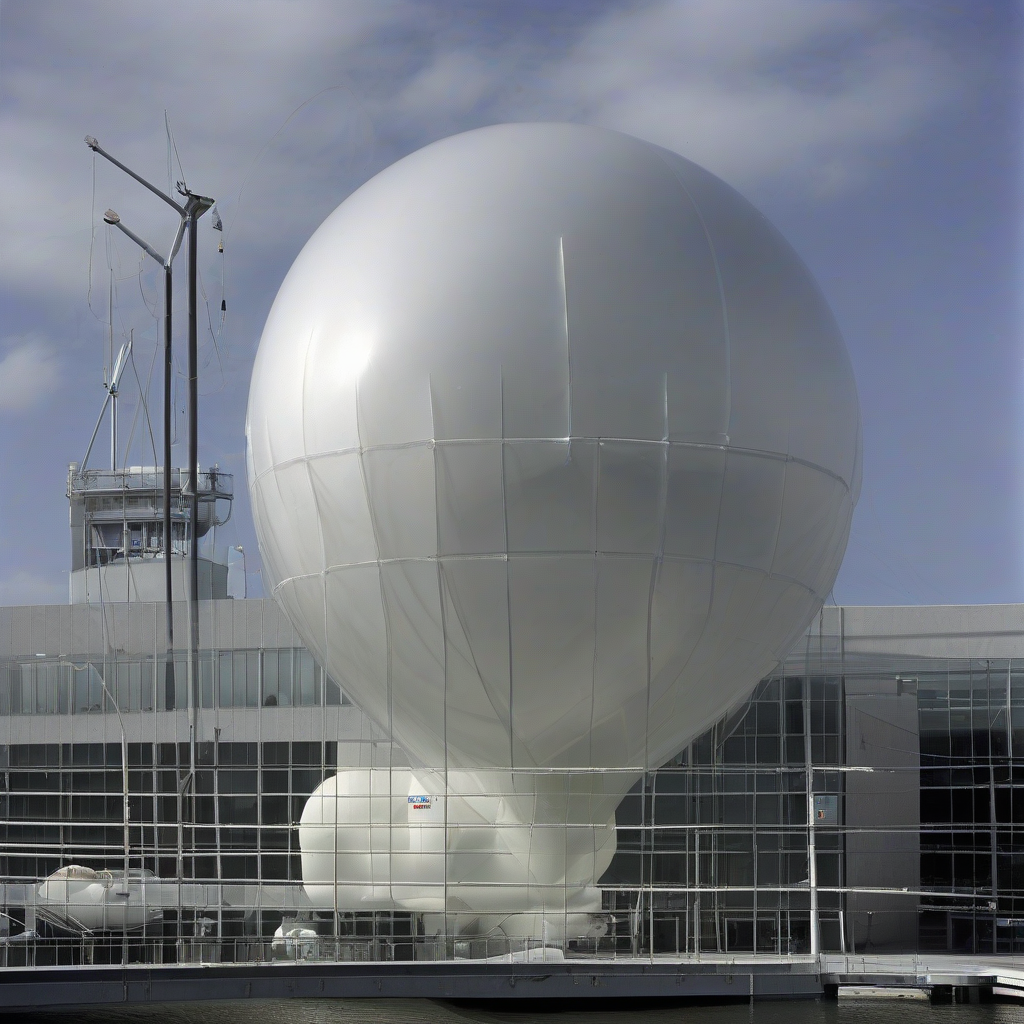

A high-altitude weather balloon deployed by WindBorne Systems successfully transitioned into a functional ocean buoy after an unscheduled landing, according to IEEE Spectrum. The device, designed for aerial atmospheric sensing, continued to transmit critical meteorological data despite its change in environment, highlighting the durability and adaptability of the company's sensor arrays.
According to IEEE Spectrum, WindBorne utilizes a specialized fleet of weather balloons equipped with miniaturized sensor suites to refine global weather forecasting models. These instruments typically operate at high altitudes to capture vertical profiles of the atmosphere. The incident in question occurred when a balloon, intended for mid-atmosphere measurement, descended into a marine environment. Instead of failing, the hardware successfully utilized its onboard communication systems to relay surface-level sea and air data, providing unexpected intelligence for meteorological analysis.
This event underscores the integration of edge computing and specialized sensor hardware that defines the current direction of weather-focused AI development. WindBorne’s technology is engineered to support regional and global forecasting accuracy, which often relies on sparse data in remote oceanic regions where traditional terrestrial sensing stations are non-existent.
| Feature | Specification |
|---|---|
| Primary Technology | Atmospheric Sensor Suite |
| Operational Mode | High-Altitude Ballooning |
| Secondary Capability | Surface Ocean Buoy Data Relay |
| Application | Meteorological AI Training |
Why It Matters
The ability for aerial sensors to serve dual-purpose roles in maritime observation represents a significant technical efficiency in climate monitoring. By repurposing failed flights into temporary ocean buoys, firms like WindBorne can potentially mitigate the loss of expensive hardware while increasing the density of oceanic data points. For the weather-forecasting industry, this capability offers a pathway to reduce reliance on legacy buoy networks, which are costly to maintain and logistically difficult to deploy across expansive global waters. Scaling this capability could lead to more accurate short-term forecasting models for maritime and aviation safety.
Reader Discussion & Insights