
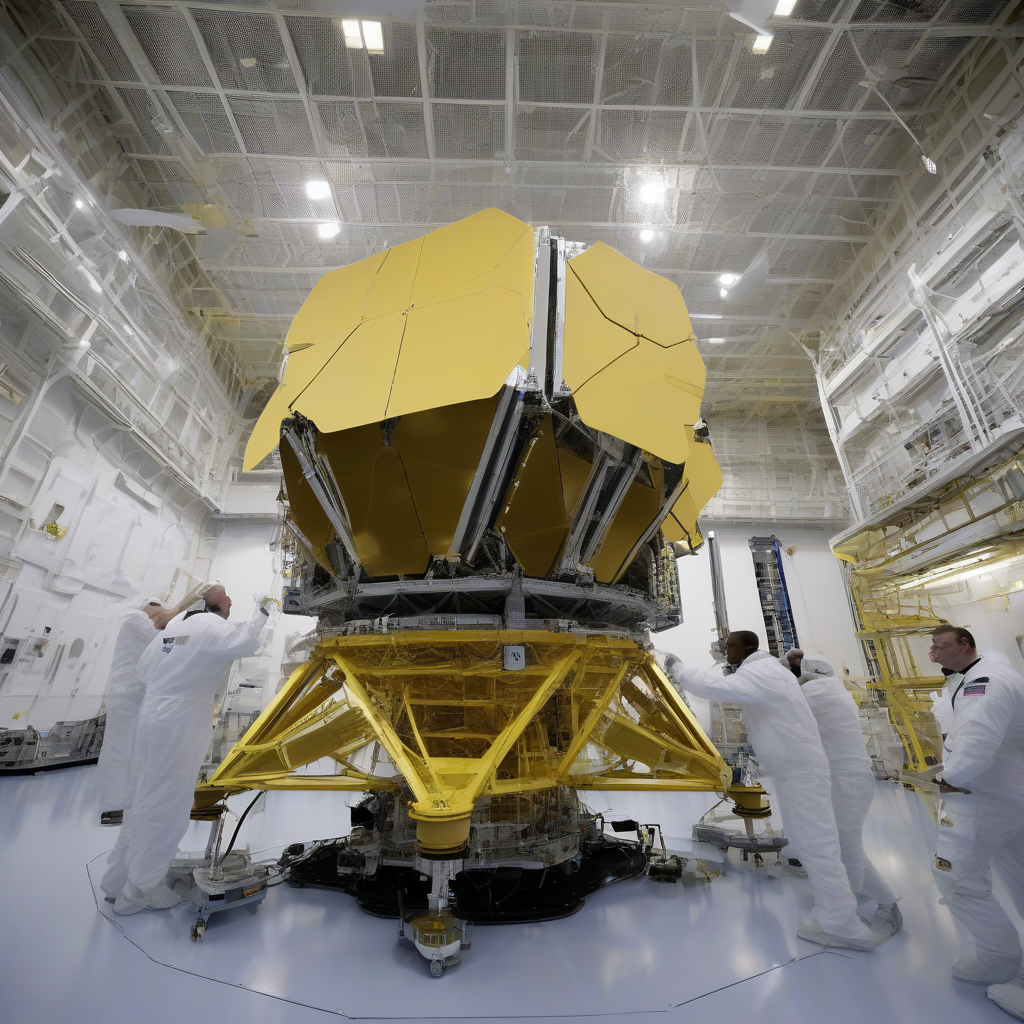
Data retrieved by the James Webb Space Telescope indicates that Neptune’s satellite system underwent significant gravitational upheaval in the distant past, according to Hacker News Front Page. The findings point to a chaotic developmental history for the moons orbiting this gas giant, providing new evidence that challenges previous models of stable orbital evolution within the outer solar system.
The investigation highlights specific irregularities in the orbital paths and surface compositions of the moons, which researchers believe are residual signatures of a massive collision or orbital reorganization. While the specific numerical modeling is still being processed by planetary scientists, the data suggests that these ancient disasters effectively reorganized the distribution of smaller bodies surrounding Neptune. Observations utilize high-resolution infrared imaging to strip away the obscuring atmosphere, allowing for a precise mapping of the moon system that was previously impossible.
Orbital System Observations
| Observation Metric | Detail Description |
|---|---|
| Primary Instrument | James Webb Space Telescope (JWST) |
| Subject | Neptune Satellite System |
| Reported Event | Ancient Orbital Disruption |
| Primary Finding | Evidence of historic moon collisions |
This analysis relies on primary data streams integrated from NASA’s deep space observational archives. The findings are consistent with planetary migration theories, which posit that the gas giants significantly shifted their positions early in the solar system's lifespan. By analyzing the current trajectories of Neptune's moons, astronomers are building a timeline that confirms these bodies were likely captured or formed in a volatile environment rather than settling into a peaceful, static orbit.
Why It Matters
Understanding the violent history of Neptune’s moons serves as a proxy for evaluating the long-term stability of exoplanetary systems. As the aerospace and satellite technology sectors move toward deeper exploration of the outer solar system, these findings inform how engineers model orbital mechanics for future long-duration missions. Furthermore, the evidence of past collisions highlights the potential for debris fields that could pose unexpected challenges for deep-space navigation, moving beyond simple static obstacle avoidance into dynamic environmental modeling for future probes.
Reader Discussion & Insights