
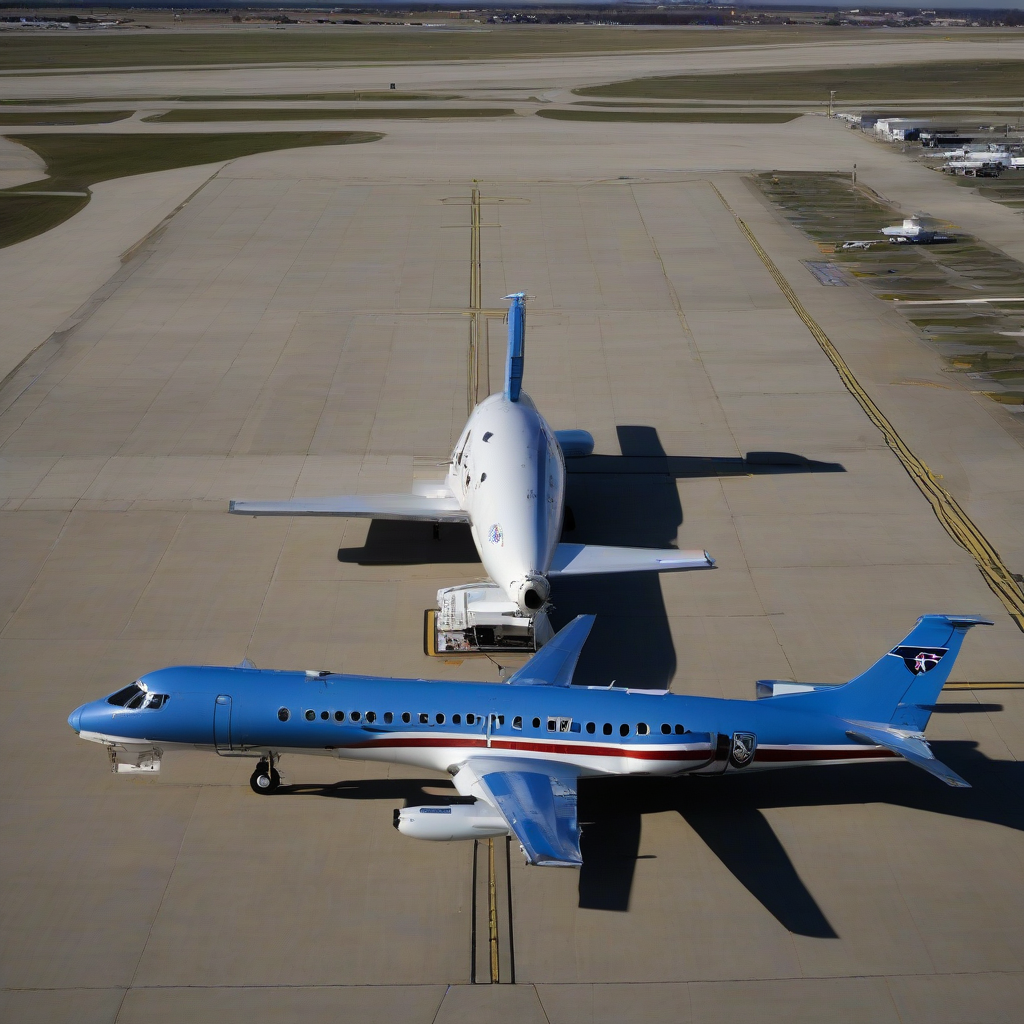

Vance Air Force Base is set to host formal T-1A Jayhawk sunset events scheduled for Aug. 21-22, according to AVweb. These proceedings, organized by the 3rd Flying Training Squadron, are intended to honor the personnel, pilots, and maintainers associated with the aircraft’s 34-year service life within the United States Air Force. The platform, a military variant of the Beech 400A business jet, has served as a primary training asset for airlift and tanker operations since its introduction.
Operational History and Specifications
The T-1A Jayhawk features a cockpit configuration designed to accommodate one instructor alongside two students. Propulsion is provided by two Pratt & Whitney JT15D-5B turbofan engines. The Air Force took delivery of its first T-1A unit in 1992, with student instruction programs launching in 1993. Vance Air Force Base integrated the aircraft into its curriculum in 1995. Recent operational data indicates that T-1 crews at Vance completed eight sorties during the week ending July 31.
| Feature | Specification |
|---|---|
| Aircraft Model | Beech 400A (Military Version) |
| Engines | 2x Pratt & Whitney JT15D-5B |
| Initial Delivery | 1992 |
| Training Launch | 1993 |
| Vance AFB Arrival | 1995 |
Transition to Simulator-Based Training
The service is transitioning pilot instruction toward the Air Mobility Fundamentals-Simulator (AMF-S) course. This program utilizes mixed-reality training devices based on the T-1A cockpit to teach crew coordination, automation, and specific flight management systems. The curriculum emphasizes one-engine-inoperative procedures, aerial refueling, and formation flying. Vance Air Force Base successfully graduated its first full AMF-S class in May 2023.
Why It Matters
The retirement of the T-1A Jayhawk represents a broader shift in military flight training toward high-fidelity, simulator-based instruction. By reducing reliance on physical flight hours for early-stage multi-engine training, the Air Force aims to increase throughput and reduce airframe fatigue. This transition reflects a growing trend in global defense sectors to prioritize synthetic training environments, which provide repeatable, lower-cost, and safer conditions for mastering complex systems like formation flying and emergency protocols before students advance to their final assigned aircraft platforms.
Lt. Col. Eddie Altizer, commander of the 48th Flying Training Squadron, previously noted that the aircraft functioned as the primary classroom for developing future aircraft commanders in crew resource management and instrument procedures.
Reader Discussion & Insights