
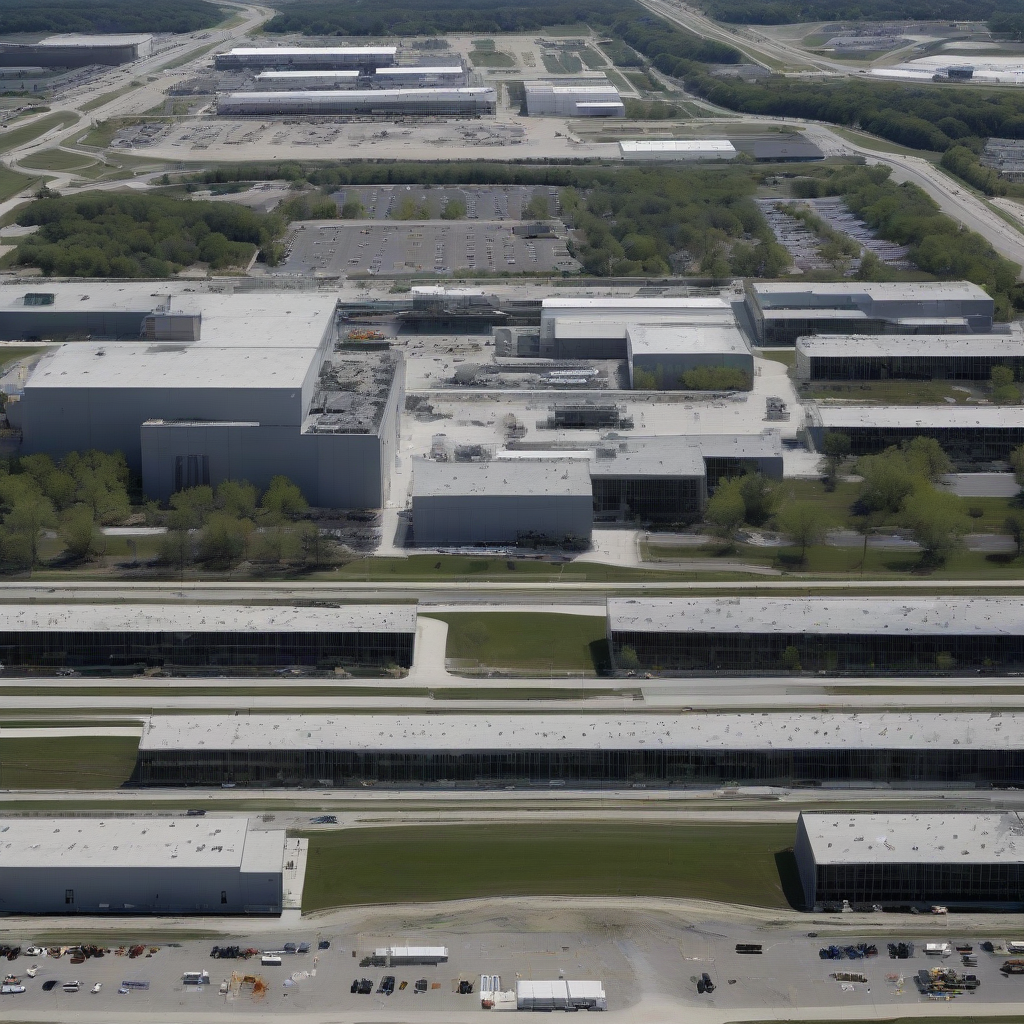
Manufacturing and construction are emerging as primary drivers of job growth in the United States, fueled by a high-intensity buildout of AI infrastructure that remains uninhibited by current interest rate levels. According to Axios, these sectors are finally seeing sustained momentum after enduring years of pressure from the Federal Reserve's tightening cycle.
Data from the Institute for Supply Management indicates that the manufacturing sector has experienced seven consecutive months of expansion. Notably, the group's employment gauge entered expansion territory in August 2026, marking the first time in nearly three years that more manufacturers reported hiring rather than workforce reductions. Furthermore, manufacturing output has reached its fastest growth rate since late 2021. This follows a period between early 2023 and late 2025 during which manufacturing payrolls saw a decline of roughly 300,000 jobs.
In the construction sector, nonresidential building has reached record employment levels. In the first six months of 2026, the industry added approximately 15,000 jobs. This growth is driven almost entirely by the commercial sector, as residential construction shed 10,000 jobs during the same period. The Census Bureau reported that private data center construction spending hit an annualized $68 billion in June 2026, representing an all-time record.
| Metric | Figure | Period |
|---|---|---|
| Manufacturing job decline (2023-2025) | 300,000 | 2023-2025 |
| Nonresidential construction job gains | 15,000 | First 6 months 2026 |
| Residential construction job losses | 10,000 | First 6 months 2026 |
| Annualized data center construction spending | $68 billion | June 2026 |
Why It Matters
This resurgence highlights a bifurcated economy where cyclical industrial activity is decoupling from traditional interest rate sensitivities due to the structural necessity of AI hardware. While residential housing remains hampered by mortgage-linked borrowing costs, the 'full procurement' phase of data center development acts as a fiscal stimulus for machinery and semiconductor firms. This pivot suggests that capital expenditure in the technology sector is now the primary lever for industrial employment, potentially shielding the broader manufacturing base from the volatility typical of higher-rate environments.
Reader Discussion & Insights