
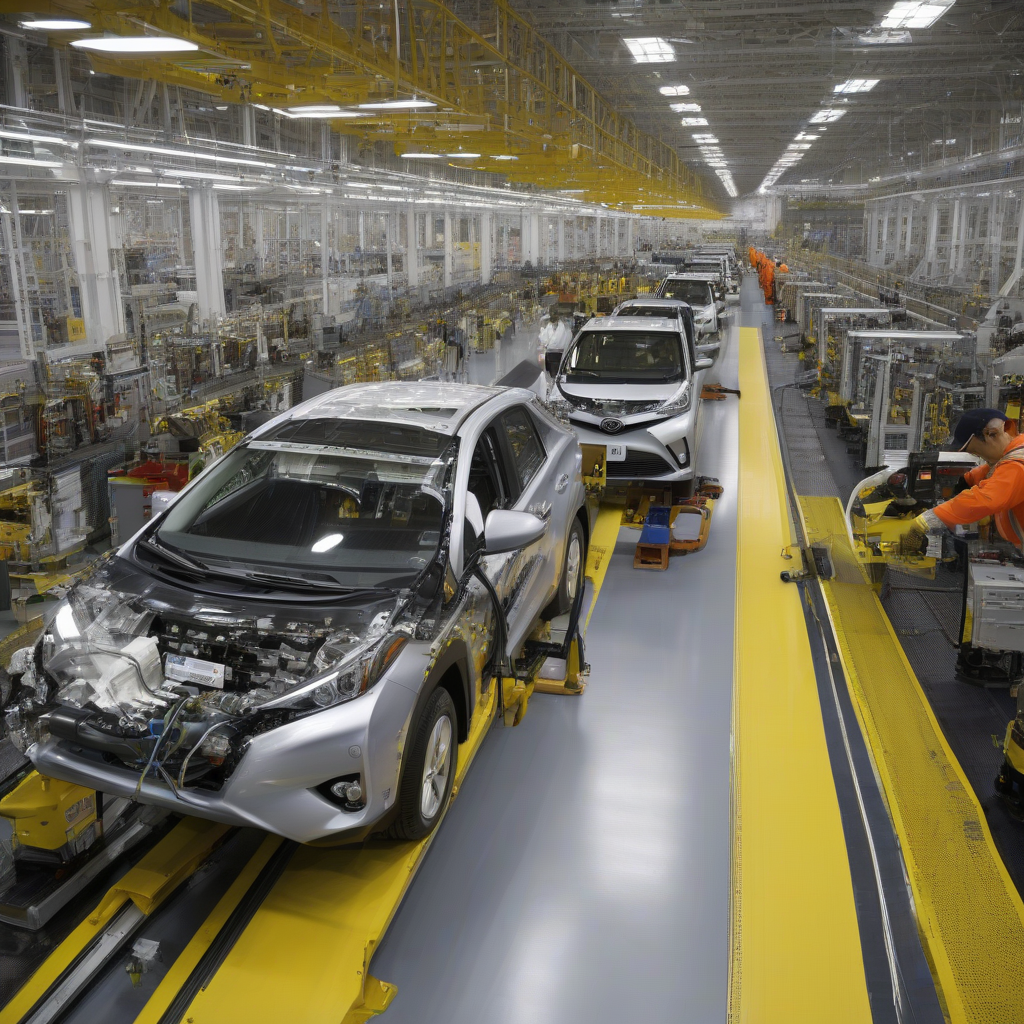
Toyota is preparing for a significant expansion in its hybrid vehicle output, aiming to achieve record sales volumes in the coming years. According to CarBuzz, the automaker disclosed in its first-quarter financial filings that it intends to scale its hybrid offerings beyond any previous levels, establishing a new operational offensive that places competitors like Hyundai, Kia, and Honda under increased market pressure.
Production Outlook and Strategic Growth
The company’s strategy revolves around an aggressive implementation of new battery technologies scheduled for 2027. By integrating these advanced systems, Toyota expects to solidify its dominance in the hybrid sector, which currently serves as a bridge between internal combustion engines and full battery-electric vehicles. While specific unit counts were not broken down in the initial release, the financial documentation highlights that hybrid volume is poised to exceed all historical benchmarks set by the company.
| Metric | Status / Goal |
|---|---|
| Strategic Timeline | 2027 |
| Production Growth | Record-breaking internal targets |
| Key Competitors | Hyundai, Kia, Honda |
| Primary Technology | Advanced hybrid battery systems |
Institutional Context
The pivot toward enhanced hybrid capacity is backed by data from Toyota’s latest quarterly earnings, which reflects a shift in consumer demand favoring hybrid efficiency over purely electric models in several core markets. This aligns with broader industry observations where regulatory requirements regarding fleet emissions have intensified, forcing legacy manufacturers to refine their existing powertrains while developing next-generation energy storage.
Why It Matters
Toyota's focus on hybrid technology represents a calculated bet against the rapid total electrification expected by some industry analysts. By optimizing battery density and cost-efficiency for hybrids, Toyota is effectively extending the life cycle of the internal combustion engine. This approach minimizes the capital-intensive nature of transitioning entirely to lithium-ion architectures while keeping vehicle pricing competitive for the mass market. If successful, this strategy could force global rivals to recalibrate their own R&D spending, shifting funds away from pure EV platforms back toward hybrid optimization to protect market share.
Reader Discussion & Insights