
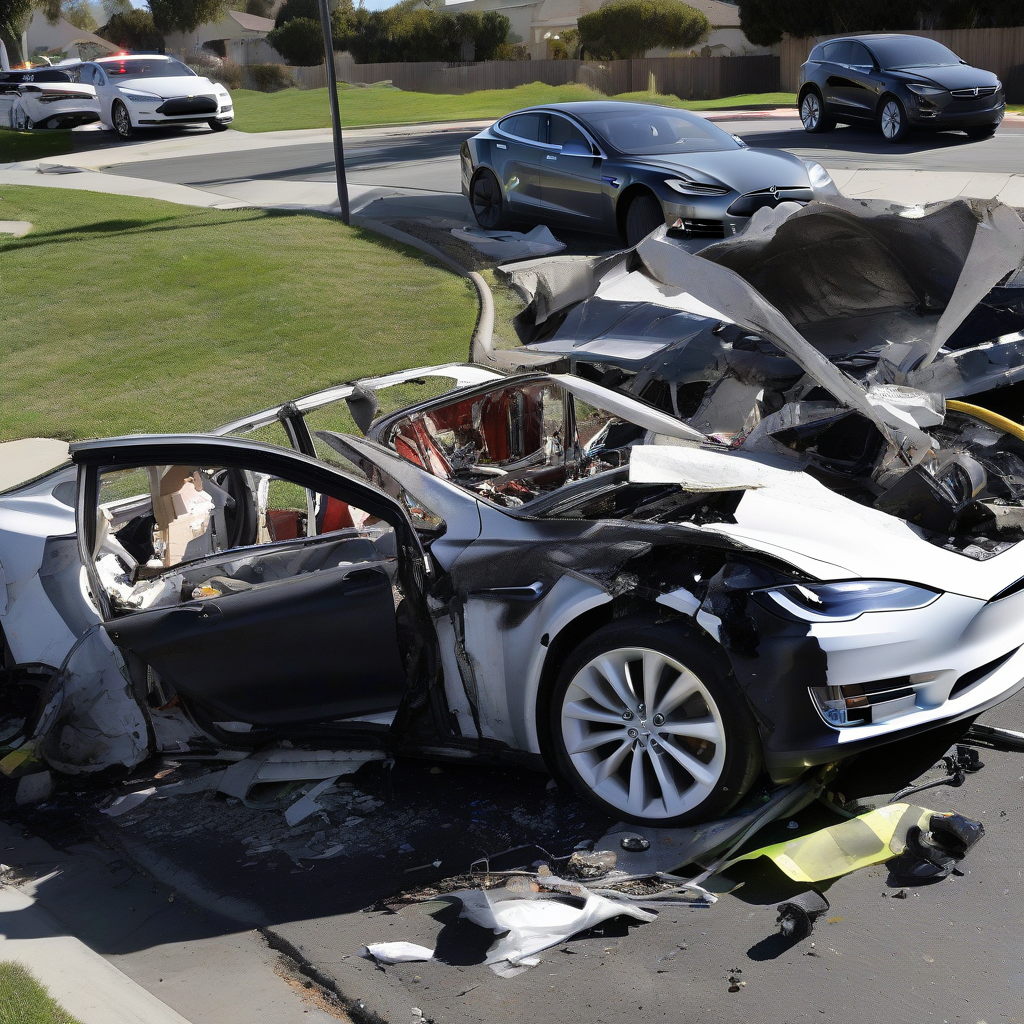

A high-impact collision involving a Tesla vehicle occurred in the city of Orange, California, resulting in substantial property damage to private residences. The incident, which saw the vehicle leave the roadway and impact structural elements of residential homes, is currently being assessed by local authorities to determine the causal factors involved in the crash.
According to Tesla, the company is aware of the reports regarding the event and is coordinating with relevant investigative bodies as part of the standard review process. While specific diagnostic data points regarding vehicle performance at the time of the impact have not yet been released, public safety officials noted that the collision caused a trail of destruction, raising questions regarding the circumstances leading up to the vehicle's departure from the road surface.
Incident Summary Data
| Attribute | Detail |
|---|---|
| Vehicle Manufacturer | Tesla |
| Incident Location | Orange, California |
| Event Type | Residential Collision |
| Primary Concern | Property Destruction |
Local law enforcement and municipal safety inspectors have initiated assessments of the affected residential structures to determine structural integrity. The sequence of events leading to the collision has not been fully verified, and agencies are expected to review data logs and witness accounts to establish a definitive timeline of the incident.
Why It Matters
The frequency of incidents involving high-performance electric vehicles crashing into residential infrastructure highlights a growing tension between rapid consumer adoption of advanced driver-assistance systems and the established requirements for municipal zoning and safety buffers. As these vehicles feature high torque and increased curb weight compared to internal combustion counterparts, the kinetic energy involved in residential collisions is often higher, leading to more extensive structural damage. Industry observers expect that insurance premiums and municipal liability frameworks will adapt as data-sharing between manufacturers and regulators becomes more formalized to address these specific incident patterns.
Reader Discussion & Insights