
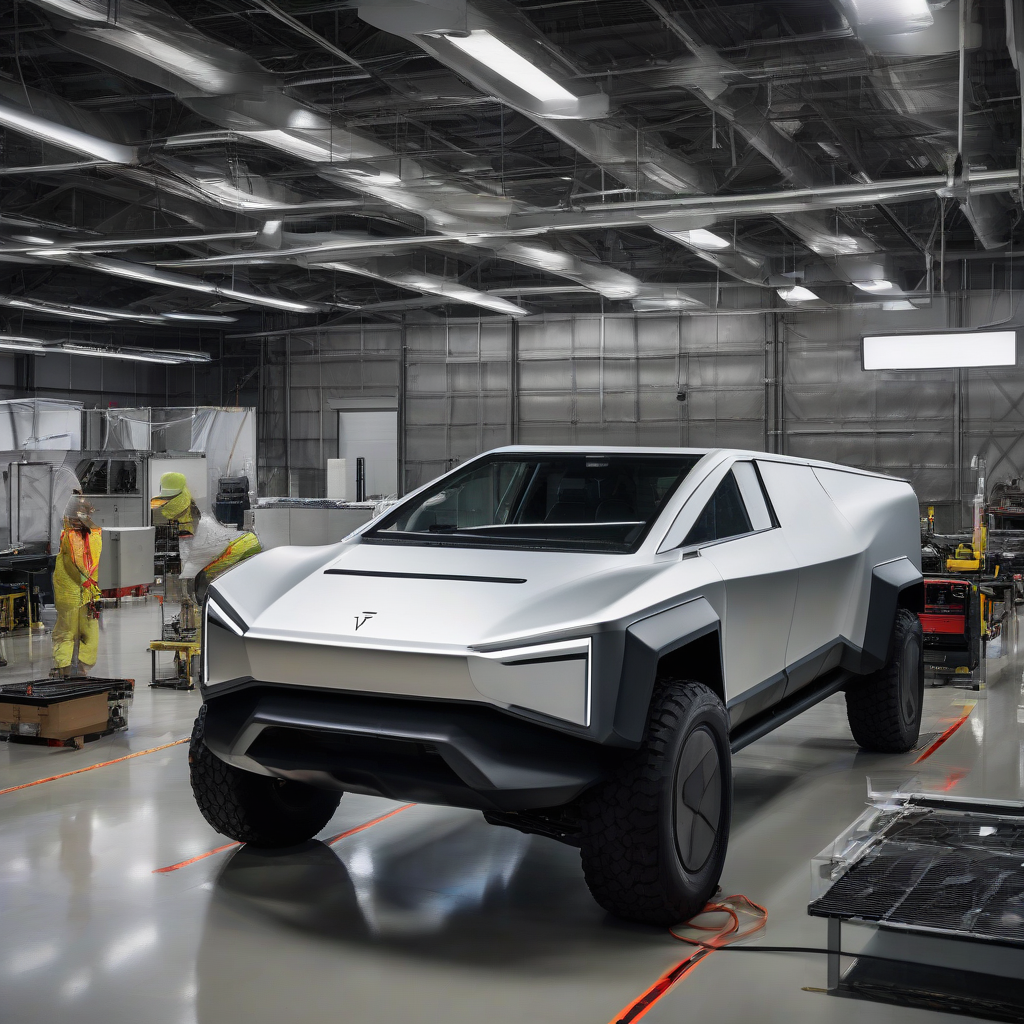

Tesla’s Giga Texas facility has resumed higher volumes of Cybertruck production following a legal standoff that previously constrained manufacturing output, according to Teslarati. Observations from aerial footage captured on Wednesday morning identified approximately 100 or more Cybertrucks staged in the outbound lot, marking a notable increase in inventory compared to recent weeks.
The production uptick follows a significant legal development in the ongoing dispute between Tesla and Angstrom Automotive Group. On Tuesday, a judge issued a temporary restraining order against the supplier. The conflict originated in late July after Angstrom informed Tesla of plans to shutter its Troy, Texas facility, which housed essential manufacturing components including die-cast tools, trim dies, and additional stamping equipment necessary for the Cybertruck assembly line.
Legal filings indicate that Tesla attempted to recover its property, but representatives were denied access to the facility, even when accompanied by law enforcement. Tesla alleged that Angstrom held its equipment as leverage to demand an additional $250,000 per week to sustain operations. Furthermore, the complaint noted that a shipment of 700 finished parts remained trapped within the building during the impasse.
Key Data Points
| Item | Value |
|---|---|
| Observed Cybertrucks in Lot | ~100+ |
| Disputed Weekly Payment Demand | $250,000 |
| Trapped Finished Parts | 700 |
| Court Case Number | 6:26-cv-00477 |
Official documents from the U.S. District Court for the Western District of Texas, Waco Division, confirm that U.S. District Judge Christopher R. Wolfe granted the Temporary Restraining Order and a Writ of Replevin. This legal action grants Tesla immediate authority to enter the Angstrom facility to retrieve its manufacturing assets. While a full evidentiary hearing is pending, the immediate visibility of new trucks in the Giga Texas outbound lot indicates that the lack of specialized tooling was the primary bottleneck.
Why It Matters
This incident underscores the inherent risks in highly specialized, single-source automotive supply chains. As EV manufacturers like Tesla transition from legacy vehicle architectures to complex, custom-stamped stainless steel frames, the dependency on niche tooling providers increases. When a supplier faces financial instability, the specialized nature of the equipment makes it nearly impossible to quickly pivot to alternative manufacturing partners. This legal confrontation highlights how supply chain fragility can translate into immediate, measurable impacts on factory output, proving that software-defined vehicle production remains tethered to the physical constraints of custom metal fabrication.
Reader Discussion & Insights