
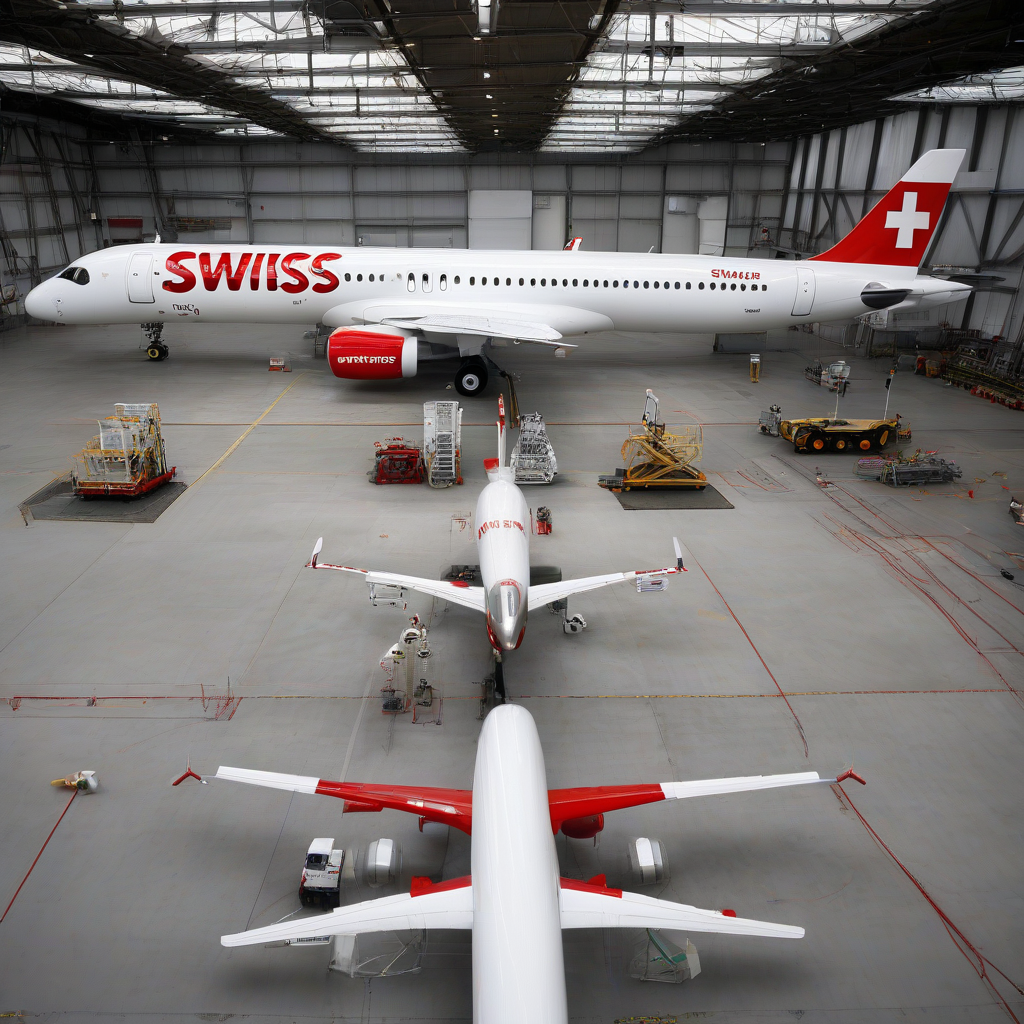
SWISS is set to decommission its entire fleet of Airbus A220-100 aircraft, marking the end of an era for the model that first introduced the Bombardier CSeries to commercial aviation. According to Simple Flying, the airline plans to remove all operational A220-100 jets from its active rotation by the close of 2027.
The carrier originally operated a fleet of nine A220-100s. Currently, only four of these aircraft remain in service. The transition is already underway, as two of the original fleet units are currently being stripped for parts. This move signals a significant shift for the airline, which served as the launch customer for the airframe, effectively phasing out the smaller A220 variant just ten years after its inaugural commercial flight.
Fleet Status Overview
| Status | Count |
|---|---|
| Original Fleet Total | 9 |
| Currently Operational | 4 |
| Units Undergoing Part-out | 2 |
| Retirement Deadline | End of 2027 |
As a primary operator of the Airbus A220 family, SWISS has been instrumental in the type's entry into the European market. While the A220-100 provided the initial pathway for this technology, the industry has since shifted its focus toward higher-capacity narrowbody configurations. The manufacturer, Airbus, continues to support the A220 program globally, though specific fleet adjustments remain at the discretion of individual airline operators based on internal operational requirements and capacity planning.
Why It Matters
The retirement of the A220-100 by its launch customer highlights the difficulty of maintaining a bifurcated fleet within a single aircraft family. As airlines seek to minimize maintenance complexity and maximize unit economics, the smaller -100 variant often struggles to justify its seat-mile costs compared to the larger -300 model. This trend suggests that while regional jets are essential for specific network densities, airlines are increasingly consolidating around larger narrowbodies to optimize pilot training, spare part inventories, and ground handling logistics across their primary short-haul operations.
Reader Discussion & Insights