
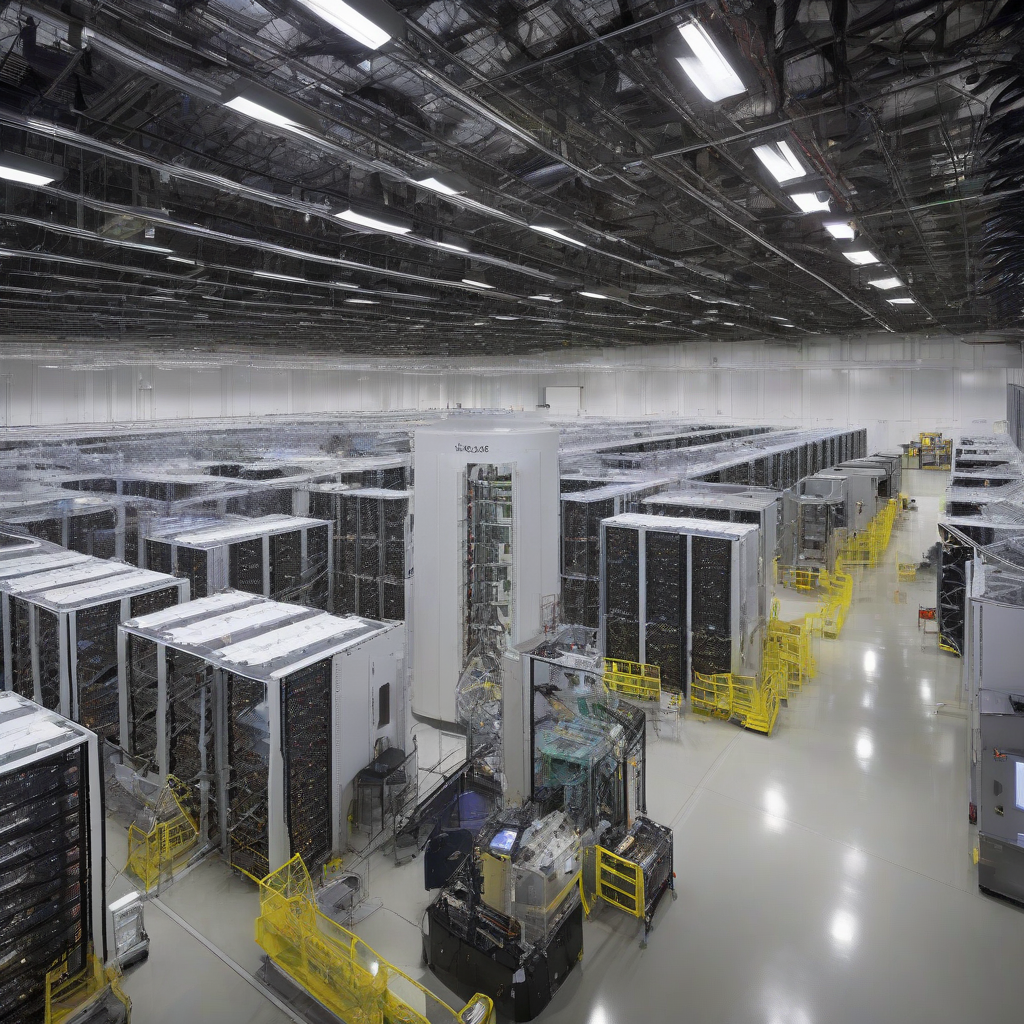

SpaceX and Terafab representatives held an initial public meeting with Grimes County residents on Wednesday to confirm that the $55 billion chip manufacturing project is officially proceeding at the Gibbons Creek Reservoir site, according to Teslarati. The update follows a $10 million payment sent by SpaceX to the county, satisfying a critical financial deadline established in a tax abatement agreement finalized this past June.
During the session, Terafab representative Riley Trennell confirmed that tax break agreements with the Iola Independent School District (ISD) and the Anderson-Shiro Consolidated Independent School District (CISD) are now active. While the company is preparing to release project renderings, the firm indicated that civil work and foundational site preparation are commencing immediately.
| Item | Value |
|---|---|
| Project Value | $55 billion |
| Initial County Payment | $10 million |
| Total Fixed Payments (35 Years) | $710 million |
| Tax Abatement Percentage | 78 percent |
| Annual County Revenue | $20 million |
SpaceX legal representative Buck Brannon clarified the structure of the tax abatement, noting it stands at approximately 78 percent rather than the 100 percent figure previously cited in secondary reports. In compensation for the abatement, SpaceX has committed to a fixed $20 million annual payment to Grimes County for 35 years, totaling $710 million—a figure that significantly exceeds the $14 million payment Tesla provided to Travis County in 2025. Environmental concerns were addressed by company representatives, who confirmed that the facility would operate its own natural gas power plants rather than drawing from the ERCOT grid. Furthermore, they stated the project would not impact local water supplies or the Navasota River, as the company plans to utilize a privately owned pumping station to divert stormwater into the Gibbons Creek Reservoir.
Why It Matters
The Terafab initiative, a joint venture between Tesla, SpaceX, and xAI, represents a massive vertical integration strategy for artificial intelligence hardware. By aiming to produce over a terawatt of AI compute annually, the project seeks to bypass the current bottlenecks in the global semiconductor supply chain. This move signals a shift where tech conglomerates act as their own utility and infrastructure providers, reducing dependency on regional power grids and merchant silicon suppliers. If successful, this model could redefine how large-scale AI data centers are built, emphasizing energy self-sufficiency over reliance on public infrastructure.
Reader Discussion & Insights