
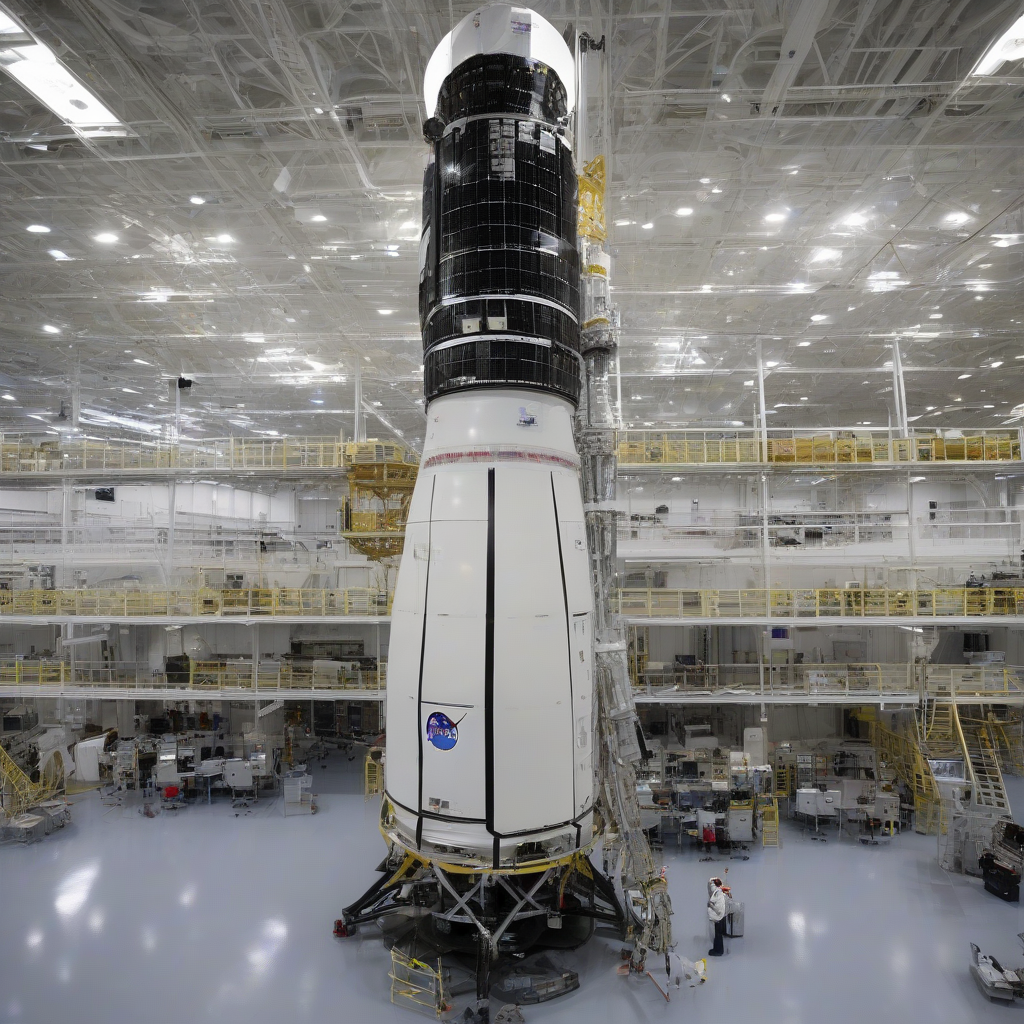
A discarded SpaceX Falcon 9 upper stage is scheduled to collide with the moon early Wednesday, August 5, according to Space.com. The vessel, a remnant from the January 2025 launch of the Blue Ghost and Hakuto-R lunar missions, is currently on a trajectory to impact the lunar surface near Einstein Crater.
The rocket stage measures 45 feet in length and weighs 8,000 pounds. As it approaches the lunar surface, it is traveling at a speed of approximately 5,400 mph. The impact is calculated to occur at 2:35 a.m. EDT (0635 UTC). Due to the location of the impact near the moon's western limb on the Earth-facing side, the event poses significant observational challenges. Astronomer Bill Gray, who identified the trajectory via Project Pluto, noted that while the flash of impact may be obscured by the moon's brightness, there is a possibility that debris plumes will be visible against the darkness of space.
Impact Technical Data
| Specification | Detail |
|---|---|
| Vehicle Type | Falcon 9 Upper Stage |
| Total Mass | 8,000 pounds |
| Dimensions | 45-foot-long (13.8-meter) |
| Velocity | 5,400 mph (8,700 km/h) |
| Impact Time | Aug. 5, 2:35 a.m. EDT (0635 UTC) |
| Predicted Plume Height | Up to 60 miles (100 kilometers) |
Simulations conducted by William Jo and his team at the University of Texas at Austin suggest that if the collision generates enough force, ejected material could rise as high as 60 miles above the lunar surface. While casual observation is unlikely, advanced amateur astronomers equipped with large-aperture telescopes may attempt to detect these ejecta plumes. Visibility conditions will vary by region, with observers in South America currently favored over those in North America, where the moon will sit at a relatively low altitude of 40 degrees above the southeastern horizon.
Why It Matters
This incident highlights the growing complexity of cislunar space management. As launch frequencies increase, the accumulation of inert orbital debris in high-altitude regimes complicates tracking and trajectory predictions. The event serves as a practical, if unintentional, experiment in lunar cratering physics. Industry stakeholders are under increasing pressure to adopt sustainable disposal practices, such as active deorbiting or graveyard orbits, to mitigate the risks associated with unguided hardware remaining in deep space for extended durations. This event emphasizes the need for international space traffic management protocols to prevent collisions with active lunar assets.
Reader Discussion & Insights