
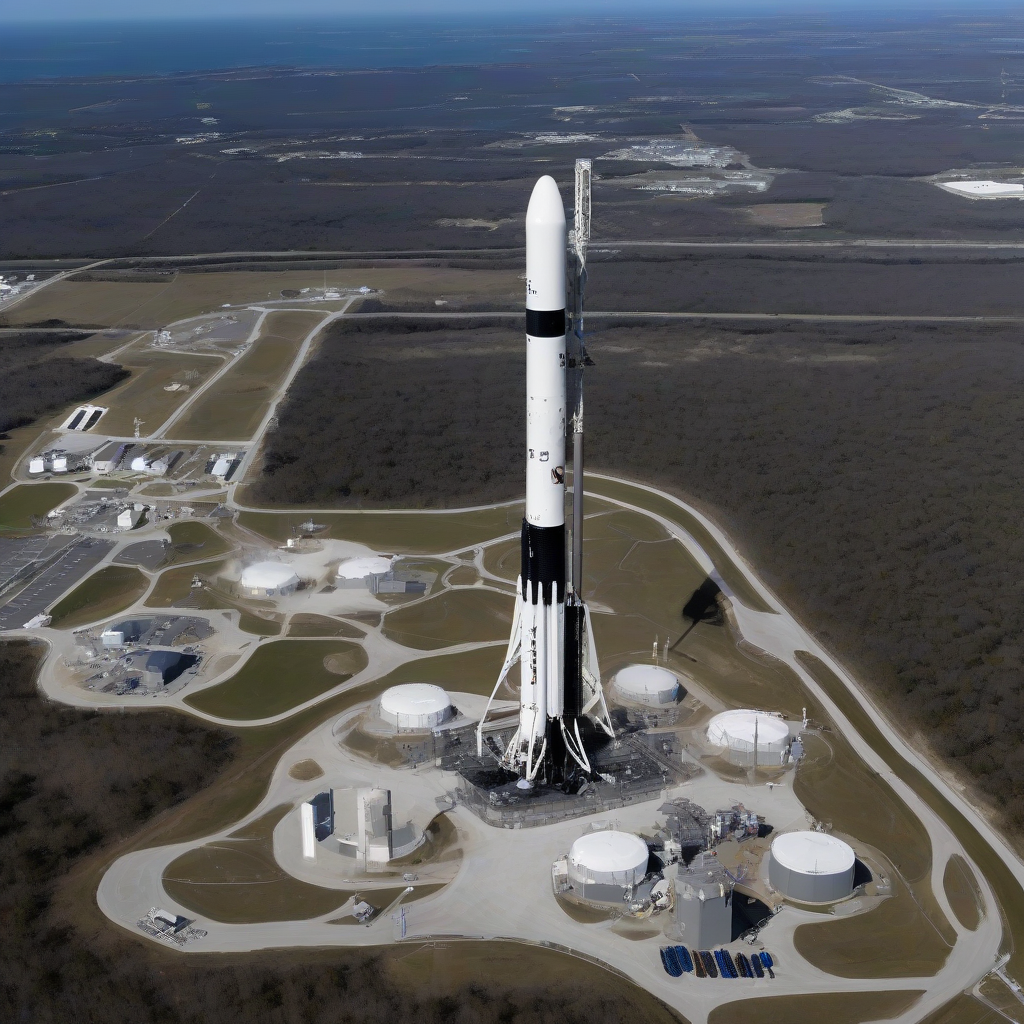
SpaceX successfully deployed 24 additional Starlink internet satellites into low Earth orbit (LEO) following a launch from California’s Vandenberg Space Force Base. According to Space.com, the mission lifted off at 1:05 p.m. EDT (1705 GMT; 10:05 a.m. local time) on Aug. 4, 2026.
This mission represents a significant milestone in the company’s high-cadence flight schedule, serving as the 90th Falcon 9 launch of 2026. Of these flights, 70 have been dedicated specifically to the expansion of the Starlink megaconstellation, which has grown to approximately 10,900 satellites in orbit.
The launch utilized booster B1063, which performed its 34th flight. Following the successful ascent, the first-stage booster returned to Earth, landing on the droneship "Of Course I Still Love You" in the Pacific Ocean approximately 8.5 minutes after liftoff. The 24 satellites were scheduled for deployment into LEO roughly 61 minutes after the launch.
| Feature | Detail |
|---|---|
| Launch Date | Aug. 4, 2026 |
| Launch Site | Vandenberg Space Force Base |
| Rocket Model | Falcon 9 |
| Payload | 24 Starlink Satellites |
| Booster Designation | B1063 |
| Booster Flight Count | 34th mission |
| 2026 Launch Total | 90th Falcon 9 flight |
Following its transition to a publicly traded company in mid-June 2026, SpaceX is scheduled to discuss its second-quarter 2026 financial results during a public webcast at 4:30 p.m. EDT (2030 GMT) today. This report follows the company's historic initial public offering earlier this year.
Why It Matters
SpaceX’s high-frequency launch capability is fundamentally changing the economics of space-based infrastructure. By normalizing rapid rocket reusability—as evidenced by booster B1063 nearing record-breaking flight counts—SpaceX has effectively lowered the cost per kilogram to orbit, forcing competitors to adjust their own vehicle development strategies. As the company moves into its post-IPO phase, the sustainability of this flight cadence will be scrutinized by investors. The ability to manage both the physical manufacturing of hardware and the capital requirements of a public entity represents a new test for the aerospace sector.
Reader Discussion & Insights