
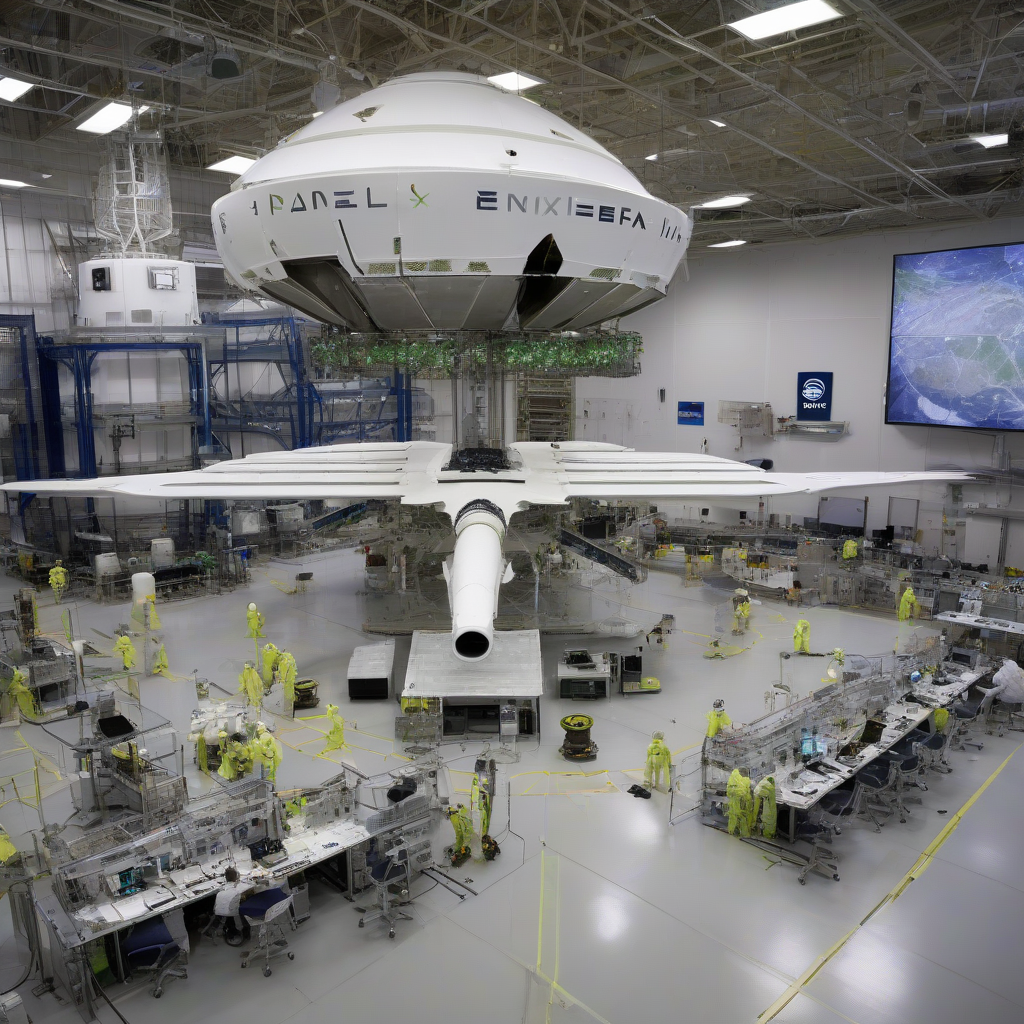
SpaceX is set to standardize its hardware procurement around NVIDIA’s computing architecture as it expands its capabilities in artificial intelligence. This strategic pivot reflects an deepening collaboration between the space exploration firm and the semiconductor manufacturer, according to NVIDIA News.
While specific volume commitments and financial terms of the procurement agreement remain undisclosed, the move underscores a focus on high-performance computing required for complex orbital mechanics and autonomous system management. By centering its infrastructure on a single vendor, SpaceX aims to streamline the development and deployment of its space-based AI servers.
Hardware Integration Data
| Attribute | Specification | Status |
|---|---|---|
| Hardware Vendor | NVIDIA | Exclusive |
| Application | Space-based AI Servers | Development |
| System Architecture | Proprietary AI Compute | Planned |
This decision marks a shift for SpaceX as it attempts to integrate more advanced machine learning models directly into its satellite and rocket systems. Currently, the company manages the Starlink constellation and its Falcon and Starship launch vehicles, all of which require significant data processing. By leveraging dedicated AI hardware in orbit, the company seeks to enhance real-time decision-making capabilities for its flight systems and network routing.
According to NVIDIA News, the collaboration will extend beyond ground-based server farms, targeting the deployment of AI-ready hardware within the vacuum of space. This presents unique engineering challenges, including thermal management and radiation hardening, though it potentially grants SpaceX an advantage in autonomous operations.
Why It Matters
The commitment to a unified hardware architecture by SpaceX suggests that the company is preparing for a new era of autonomous space exploration. By offloading computational tasks to localized AI servers, the firm reduces the reliance on latency-prone ground links, a necessity for deep-space missions and complex orbital maneuvers. This hardware consolidation also signals to the aerospace industry that modularity is taking a backseat to performance-driven vertical integration, potentially forcing competitors to re-evaluate their own cloud-compute and onboard-processing strategies.
Reader Discussion & Insights