
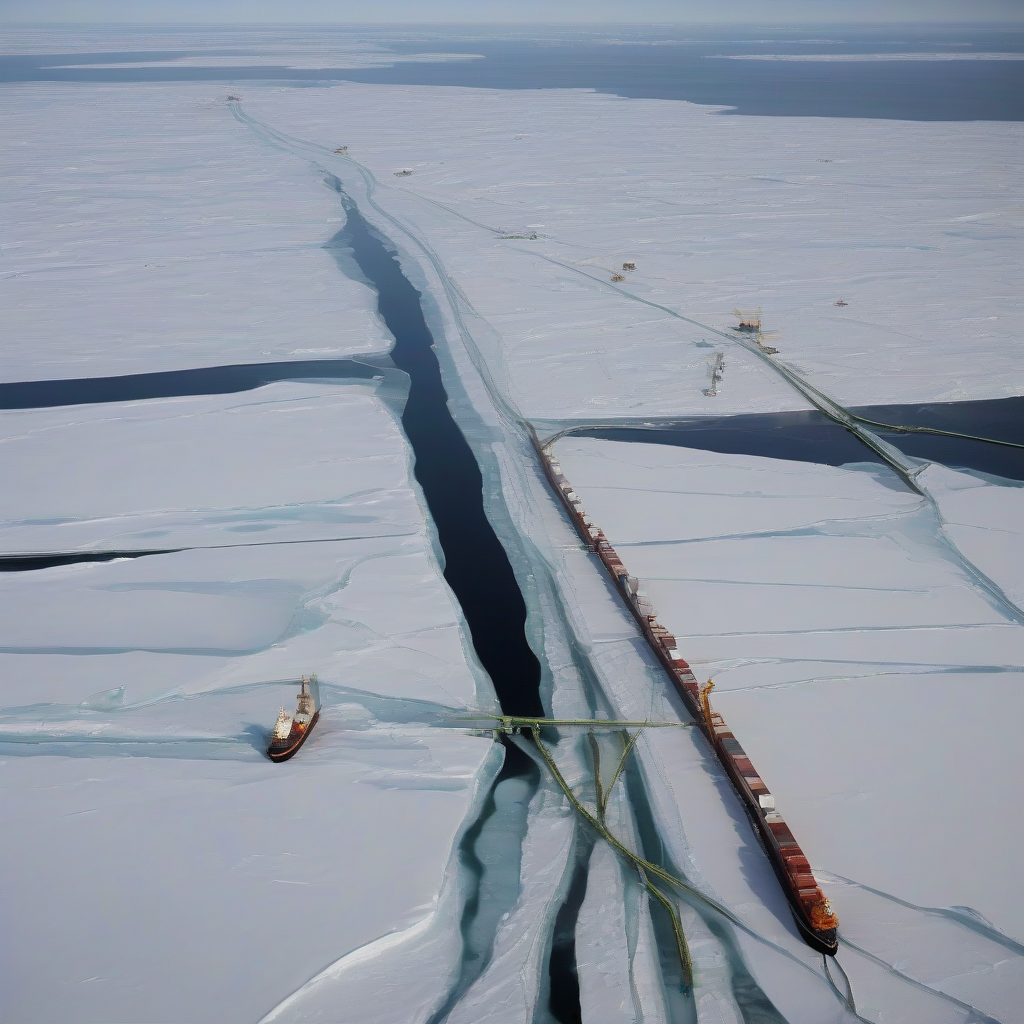

A Russian convoy of oil tankers has completed a transit into one of the most northern commercial shipping lanes ever recorded in the Arctic. According to gCaptain, the vessels reached a position within 500 nautical miles of the North Pole, a move that signals an expansion of Russian maritime activity in high-latitude zones.
Voyage Specifications
The mission involves a specialized fleet operating outside traditional shipping corridors. This passage into extreme northern waters represents a departure from standard logistical patterns, moving vessels into regions previously considered impassable for regular commercial tanker traffic.
| Parameter | Detail |
|---|---|
| Proximity to North Pole | 500 nautical miles |
| Vessel Category | Oil Tankers |
| Operation Region | Arctic Ocean |
| Route Classification | Commercial Shipping |
These tankers, often associated with a 'shadow fleet' intended to bypass conventional maritime restrictions, are demonstrating the capacity to utilize ice-thinned routes. The shift suggests that Russian logistical operators are testing the viability of trans-Arctic shortcuts that drastically reduce transit times between energy production sites and international markets.
Why It Matters
The push by these tankers into the High Arctic carries significant implications for global maritime regulation and environmental safety. By moving operations closer to the North Pole, Russia effectively challenges existing conventions regarding Arctic governance and search-and-rescue capabilities. From an industrial perspective, this route creates a logistical shift where traditional shipping insurance and vessel classification standards are ignored. Should this passage become a recurring route, it would pressure international maritime bodies to formalize oversight for 'shadow' operations that currently operate beyond transparent, regulatory-compliant channels.
Furthermore, the environmental risk profile of a tanker spill at 500 nautical miles from the North Pole would be catastrophic. The absence of nearby port infrastructure or recovery equipment in such a remote, ice-heavy environment ensures that any incident would likely lead to long-term ecological damage that is impossible to mitigate with current cleanup technologies.
Reader Discussion & Insights