
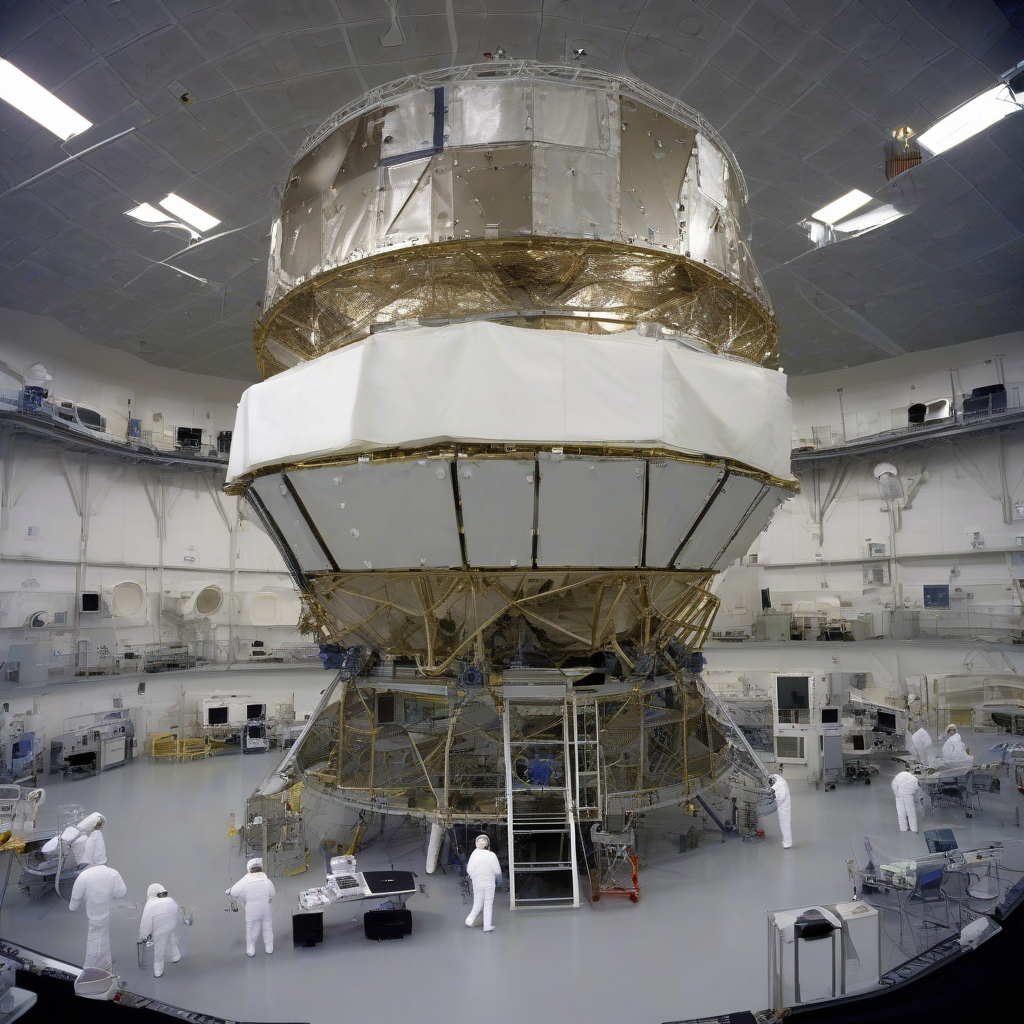
According to MIT Technology Review, NASA is scheduled to launch the Nancy Grace Roman Space Telescope from the Kennedy Space Center in Florida at the end of August. While the primary mission of the observatory focuses on studying dark matter and dark energy, the project now includes a secondary function: planetary defense against near-Earth asteroids.
The telescope features a 300-megapixel infrared camera with a field of view approximately 100 times larger than that of the Hubble Space Telescope. This technical capacity will allow it to survey over a billion galaxies, while simultaneously monitoring the solar system for potential threats. Researchers note the telescope is capable of detecting asteroids as small as 60 feet in length, a size comparable to the 2013 Chelyabinsk meteor that released 500,000 tons of TNT and resulted in 1,500 hospitalizations.
Technical Capabilities and Comparisons
| Feature | Roman Space Telescope | Hubble Space Telescope |
|---|---|---|
| Camera Resolution | 300-megapixel | Variable |
| Field of View | 100x larger coverage | Baseline reference |
| Primary Focus | Dark energy/matter | Deep space observation |
Bryan Holler, a researcher at the Space Telescope Science Institute, has been working with colleagues to highlight these planetary defense capabilities to ensure continued mission funding following threats of budget cuts in 2025. The team will present their proposal for using the telescope to track asteroid trajectories, sizes, and compositions at the upcoming Europlanet Science Congress in The Hague this September.
Integrating this function requires software modifications. Currently, the telescope’s systems are programmed to discard streaks caused by cosmic rays or moving objects as noise. Andy Rivkin of the Johns Hopkins Applied Physics Laboratory indicated that astronomers intend to manually access and analyze these discarded streaks to identify potential asteroids.
Why It Matters
Transitioning high-cost scientific assets into multi-role surveillance platforms represents a strategic shift in government aerospace funding. By demonstrating that deep-space observatories can perform localized planetary defense, agencies like NASA can justify long-term capital expenditure to lawmakers by overlapping scientific research with national security requirements. This dual-use approach reduces the need for dedicated, single-purpose asteroid detection missions, effectively maximizing the return on investment for high-budget space projects while fortifying Earth's monitoring capabilities against localized celestial threats.
Reader Discussion & Insights