
LIVEยท

Global News & Market Intelligence ยท Verified Official Dispatches

Editions:
LIVEMARKETS:
S&P 500 5,640.20 (+0.45% โ–ฒ)|NASDAQ 17,855.10 (+0.62% โ–ฒ)|BRENT CRUDE $82.40 (-0.85% โ–ผ)|BITCOIN $64,250.00 (+1.90% โ–ฒ)
Breaking
NASAยท ๐Ÿ‡บ๐Ÿ‡ธ United States

NASA Unveils SkyFall Mars Helicopter Mission Plans for 2028 Launch

NASA plans to deploy three SkyFall helicopters to Mars in December 2028 to conduct subsurface and surface data collection, building on the success of Ingenuity.

By Space Exploration & Defense DeskยทPublished ยทโฑ๏ธ 2 min read (372 words)
โšก AI-Synthesized Briefing ยท Verified Editorial

Key Story Metrics & Context

Industry Sector:Space
Companies Impacted:NASA, AeroVironment, Caltech
Geographic Scale:USA ๐Ÿ‡บ๐Ÿ‡ธ
Reporting Status:โœ“ Multi-Source Verified
NASA Unveils SkyFall Mars Helicopter Mission Plans for 2028 Launch

Executive Brief & Verified Analysis

โœ“ OFFICIAL SOURCES REVIEWED

Executive Summary

NASA plans to deploy three SkyFall helicopters to Mars in December 2028 to conduct subsurface and surface data collection, building on the success of Ingenuity.

Why This Matters

Key strategic implication: NASA will launch three SkyFall helicopters to Mars in December 2028.

Market Impact

Verified for NASA, AeroVironment, Caltech. Primary market adjustment vector.

Source Verification

Cross-referenced across regulatory dispatches, official press releases, and verified wire filings.

Operational context for NASA Unveils SkyFall Mars Helicopter Mission Plans for 2028 Launch
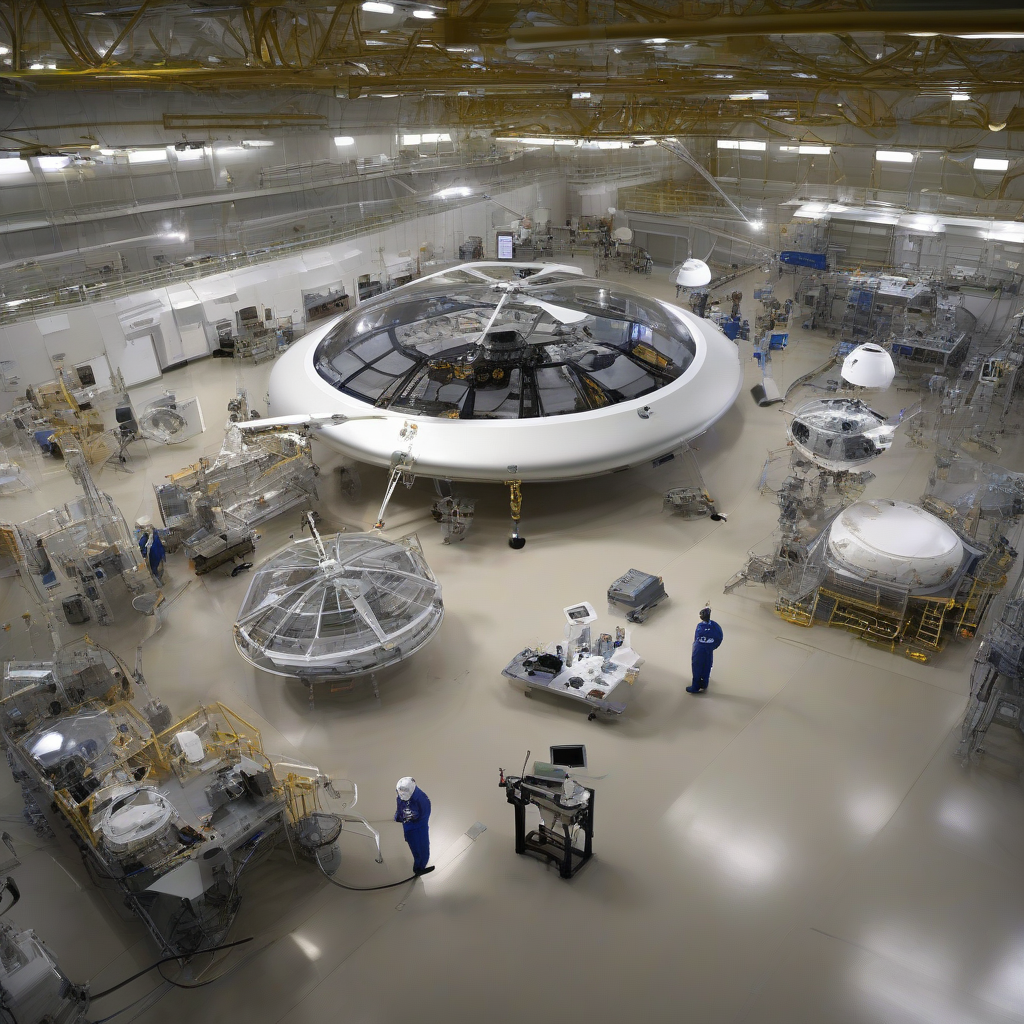
๐Ÿ“ธ Figure 1.2 ยท Operational Context
Figure 1.2: Secondary sector visual for NASA briefing on NASA Unveils SkyFall Mars Helicopter Mission Plans for 2028 Launch.Skyline Intelligence

Strategic Implications

  • โœ“NASA will launch three SkyFall helicopters to Mars in December 2028.
  • โœ“The mission follows the success of Ingenuity, which completed 72 flights.
  • โœ“AeroVironment is partnering with JPL to manufacture the new fleet.
  • โœ“Each SkyFall unit carries four instruments for radar and infrared sensing.

According to NASA News Releases, the agency has revealed details regarding the SkyFall mission, which involves deploying three advanced helicopters to the surface of Mars. Designed for high-resolution data collection, the rotorcraft will utilize a dual-sensor array to map the Martian environment. The helicopters are equipped with large antennas to emit green frequency waves for subsurface radar analysis and red beams for near-infrared imagery of regolith and surface geology.

Each aircraft in the SkyFall fleet carries four distinct instruments to conduct its scientific objectives. This mission architecture follows the operational success of the Ingenuity Mars Helicopter, which served as a technology demonstrator. Ingenuity completed 72 flights over a duration of nearly three years, establishing the viability of powered, controlled flight within the thin Martian atmosphere and providing aerial scouting to assist the Perseverance rover team with navigation and site selection.

Mission Specifications and Technical Data

FeatureSpecification
Number of Helicopters3
Instruments per Helicopter4
Project Launch DateLate 2028
Arrival at MarsDecember 2028
Primary Launch VehicleSpace Reactor-1 Freedom

Management of the SkyFall project is overseen by NASAโ€™s Jet Propulsion Laboratory (JPL), a division managed by Caltech. JPL coordinates the broader Mars Exploration Program under the authority of NASAโ€™s Science Mission Directorate in Washington. For the development phase, NASA has engaged AeroVironment, based in Arlington, Virginia, to co-design and co-manufacture the helicopters. This partnership leverages the collaborative history between JPL and AeroVironment, who previously worked together on the Ingenuity rotorcraft.

Why It Matters

The transition from singular technology demonstrators like Ingenuity to multi-unit, instrument-heavy fleets signals a maturity in extraterrestrial aerial robotics. By shifting the mission profile from experimental flight to dedicated geophysical data collection, NASA is creating a new category of mobile, low-altitude orbital sensor arrays. This evolution suggests a future where planetary exploration relies heavily on distributed swarms of autonomous vehicles rather than single-point landers, significantly increasing the spatial coverage and temporal resolution of site-specific scientific research on other worlds.

Official project information remains available through the NASA science portal, documenting the mission's trajectory from design to the projected 2028 deployment.

Deployment Roadmap & Timeline

Late 2028

Scheduled launch aboard Space Reactor-1 Freedom.

December 2028

Projected arrival at Mars.

Expected Next Steps

  • 1Finalization of hardware manufacturing by AeroVironment.
  • 2Integration of instruments into the three SkyFall helicopter units.
  • 3Preparation of the Space Reactor-1 Freedom launch vehicle.
  • 4Detailed mission planning for landing site selection.

Frequently Asked Questions

The mission is expected to launch in late 2028, with arrival at Mars scheduled for December 2028.

The helicopters are being co-designed and co-manufactured by NASA's Jet Propulsion Laboratory and AeroVironment of Arlington, Virginia.

Each of the three helicopters is equipped with four instruments.

Source Transparency & Verified Dispatches

โœ“ Verified Primary Data
โœ“
NASA News Releases๐Ÿ’ผ Corporate Dispatch
Source โ†—
โœ“
NASA Jet Propulsion Laboratory๐Ÿ’ผ Corporate Dispatch
Source โ†—

Reader Discussion & Insights

Leave a Comment

Loading discussion thread...

Get Breaking Global Intel in Your Inbox

Subscribe to the Skyline Wire AI Daily Briefing. Direct insights across Aviation, Tech, EVs, and Markets.

Original announcement link: NASA News Releases

nasamarsskyfallroboticsaeronautics
nasa skyfall missionmars helicopters 2028aerovironment marsjpl mars programingenuity helicopter successormartian subsurface radarspace reactor-1 freedom