
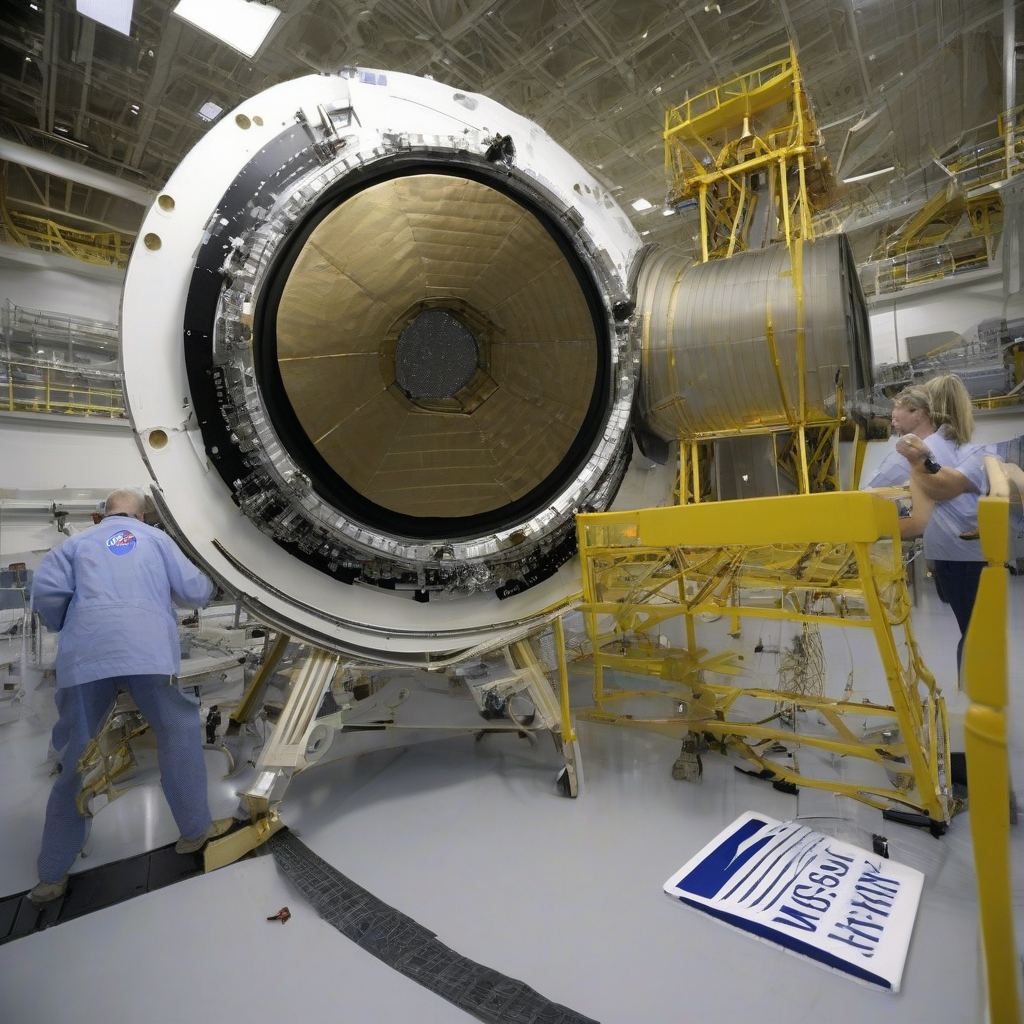
Technicians have completed the installation of a commemorative plaque on the structure of NASA’s Nancy Grace Roman Space Telescope, according to NASA News Releases. The milestone, documented in a photograph captured on July 28, 2026, serves to recognize the professional legacy of Dr. Nancy Grace Roman, who functioned as the agency’s inaugural chief astronomer and played a foundational role in establishing its modern scientific program.
Beyond its ceremonial function, the plaque houses a physical memory card containing exactly 1,350,144 names submitted by participants from around the world. The roster includes individual contributions from astronauts assigned to the upcoming NASA Artemis II and Artemis III missions. The telescope, which is currently in its final pre-launch phase, is scheduled for departure on August 30, 2026.
The Nancy Grace Roman Space Telescope is engineered to provide observation capabilities that extend beyond previous generations of infrared observatories. By incorporating technology designed to obscure starlight, the instrument will facilitate the direct imaging of exoplanets and the observation of planet-forming disks. These capabilities are intended to provide data to resolve fundamental inquiries regarding dark energy, the composition of planetary systems, and broader infrared astrophysics.
| Feature | Detail |
|---|---|
| Commemorative Plaque Date | July 28, 2026 |
| Official Launch Date | August 30, 2026 |
| Total Names Encoded | 1,350,144 |
Why It Matters
The integration of the Roman Space Telescope into NASA's active fleet represents a transition toward high-throughput galactic surveying. By automating the census of planetary systems, the telescope shifts the workload from individual discovery to statistical analysis. This move is indicative of a broader industry shift toward massive data-driven astronomical research. As agencies like NASA increase the scale of public participation—evidenced by the inclusion of over 1.3 million names—they simultaneously solidify public support for long-term space exploration funding, creating a feedback loop between scientific advancement and civic engagement.
Reader Discussion & Insights