
LIVEยท

Global News & Market Intelligence ยท Verified Official Dispatches

Editions:
LIVEMARKETS:
S&P 500 5,640.20 (+0.45% โ–ฒ)|NASDAQ 17,855.10 (+0.62% โ–ฒ)|BRENT CRUDE $82.40 (-0.85% โ–ผ)|BITCOIN $64,250.00 (+1.90% โ–ฒ)
Breaking
NASAยท ๐ŸŒ Global

NASA Astronauts Complete 6.5-Hour Spacewalk to Prep ISS Solar Upgrade

NASA astronauts Jessica Meir and Anil Menon successfully installed critical mounting hardware for the International Space Station's solar array upgrade project.

By Space Exploration & Defense DeskยทPublished ยทโฑ๏ธ 2 min read (355 words)
โšก AI-Synthesized Briefing ยท Verified Editorial

Key Story Metrics & Context

Industry Sector:Space
Companies Impacted:NASA
Geographic Scale:USA ๐Ÿ‡บ๐Ÿ‡ธ
Reporting Status:โœ“ Multi-Source Verified
NASA Astronauts Complete 6.5-Hour Spacewalk to Prep ISS Solar Upgrade

Executive Brief & Verified Analysis

โœ“ OFFICIAL SOURCES REVIEWED

Executive Summary

NASA astronauts Jessica Meir and Anil Menon successfully installed critical mounting hardware for the International Space Station's solar array upgrade project.

Why This Matters

Key strategic implication: Two NASA astronauts performed a 6.5-hour spacewalk on Aug. 6, 2026.

Market Impact

Verified for NASA. Primary market adjustment vector.

Source Verification

Cross-referenced across regulatory dispatches, official press releases, and verified wire filings.

Operational context for NASA Astronauts Complete 6.5-Hour Spacewalk to Prep ISS Solar Upgrade
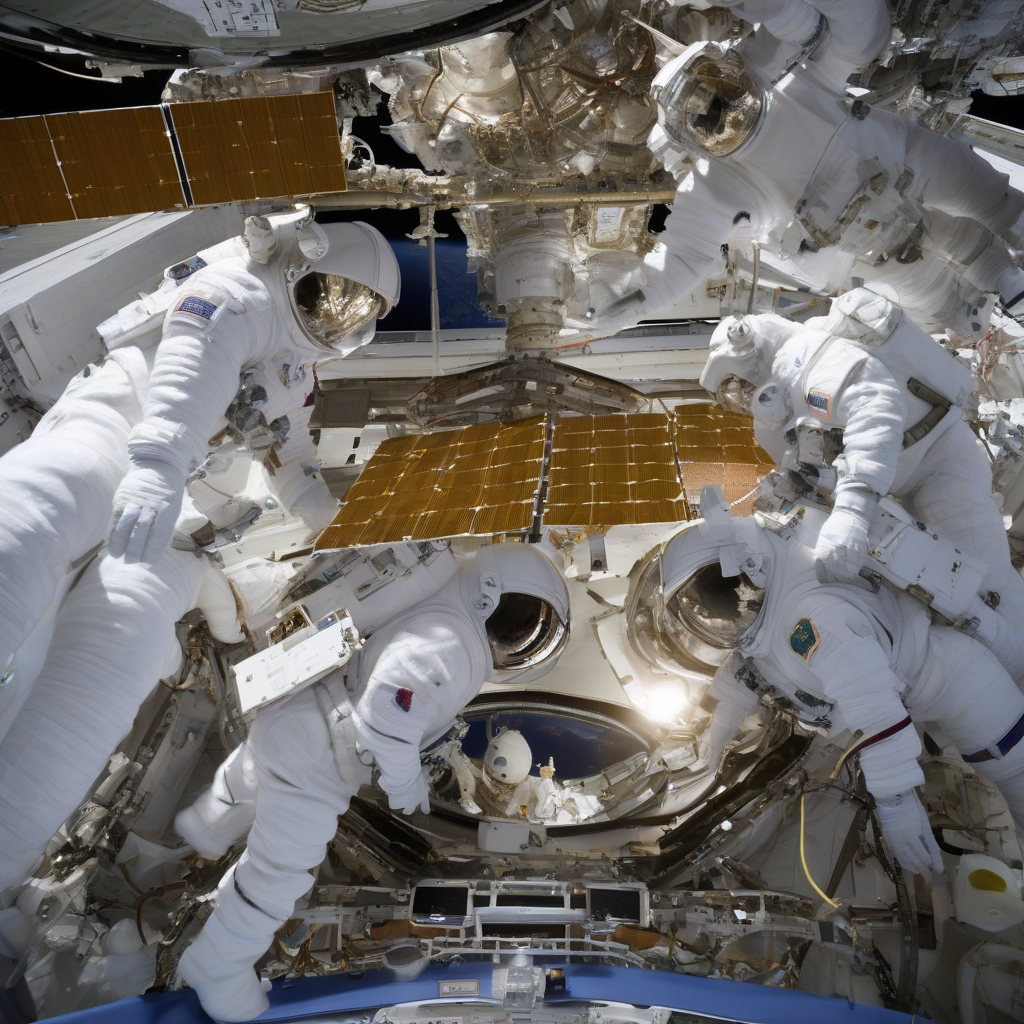
๐Ÿ“ธ Figure 1.2 ยท Operational Context
Figure 1.2: Secondary sector visual for NASA briefing on NASA Astronauts Complete 6.5-Hour Spacewalk to Prep ISS Solar Upgrade.Skyline Intelligence

Strategic Implications

  • โœ“Two NASA astronauts performed a 6.5-hour spacewalk on Aug. 6, 2026.
  • โœ“The crew installed hardware for the 3B power channel to support future solar array upgrades.
  • โœ“The new iROSA system will increase ISS power generation by 20% to 30%.
  • โœ“Six iROSA assemblies have been deployed since 2021; two remain.

On Thursday, Aug. 6, 2026, NASA astronauts Jessica Meir and Anil Menon completed a 6.5-hour spacewalk to finalize the mounting hardware for the International Space Station's (ISS) ongoing solar array augmentation. According to Space.com, the mission focused on assembling a modification kit required for the future installation of an ISS Roll-Out Solar Array (iROSA) on the station's 3B power channel.

During the extravehicular activity (EVA), the pair worked on the station's far right, or starboard (S6) truss segment. To ensure structural stability during the assembly process, Menon operated from an articulating portable foot restraint (APFR) mounted to a worksite interface (WIFEX). The astronauts secured triangular brackets onto the 3B mast canister and routed electrical cabling intended to integrate the future iROSA into the existing power channel. The installation was concluded by applying multi-layer insulation to the struts as a protective measure against micrometeoroid debris.

Since the initiation of the iROSA project in 2021, six of the assemblies have been successfully deployed. The current effort aims to modernize the station's power generation, as the original eight solar arrays have surpassed their 15-year design life and exhibit diminished performance. Following the completion of the 3B power channel hardware, only two iROSA units remain for future delivery.

Solar Array Upgrade Data

SpecificationDetail
Spacewalk Duration6.5 hours
Date of OperationAug. 6, 2026
Target Power Channel3B (Starboard/S6)
Power Increase Projection20% to 30%
Remaining iROSA Units2

Why It Matters

The ongoing power augmentation of the ISS is vital for sustaining long-term orbital research. By increasing the station's electricity supply by 20% to 30%, NASA is extending the operational life of the laboratory while preparing for intensive technology demonstrations. This transition from legacy arrays to high-efficiency roll-out solar technology sets a operational baseline for future commercial space stations and deep-space habitation modules. As energy demands rise with newer payloads and artificial intelligence-driven research instruments, the ability to retrofit existing infrastructure in high-radiation, microgravity environments will define the commercial viability of low Earth orbit operations.

Deployment Roadmap & Timeline

2021

Initial deployment of iROSA assemblies begins.

August 6, 2026

Astronauts install mounting hardware for the 3B power channel.

Expected Next Steps

  • 1Delivery of the two remaining iROSA units later in 2026.
  • 2Installation and deployment of the final two solar array wings.
  • 3Integration of the final power channels to reach full power capacity.

Frequently Asked Questions

The astronauts installed mounting hardware on the 3B power channel to support the future installation of a new ISS Roll-Out Solar Array (iROSA).

The upgraded system is expected to increase the station's electricity supply by 20% to 30%.

Two iROSA assemblies are still awaiting delivery to the station later this year.

Source Transparency & Verified Dispatches

โœ“ Verified Primary Data
โœ“
NASA๐Ÿ’ผ Corporate Dispatch
Source โ†—

Reader Discussion & Insights

Leave a Comment

Loading discussion thread...

Get Breaking Global Intel in Your Inbox

Subscribe to the Skyline Wire AI Daily Briefing. Direct insights across Aviation, Tech, EVs, and Markets.

Original announcement link: Space.com

nasaissspacewalksolar-energyspace-exploration
nasa astronautsinternational space stationirosa solar arrayiss power upgradespace exploration news3b power channeljessica meiranil menon