
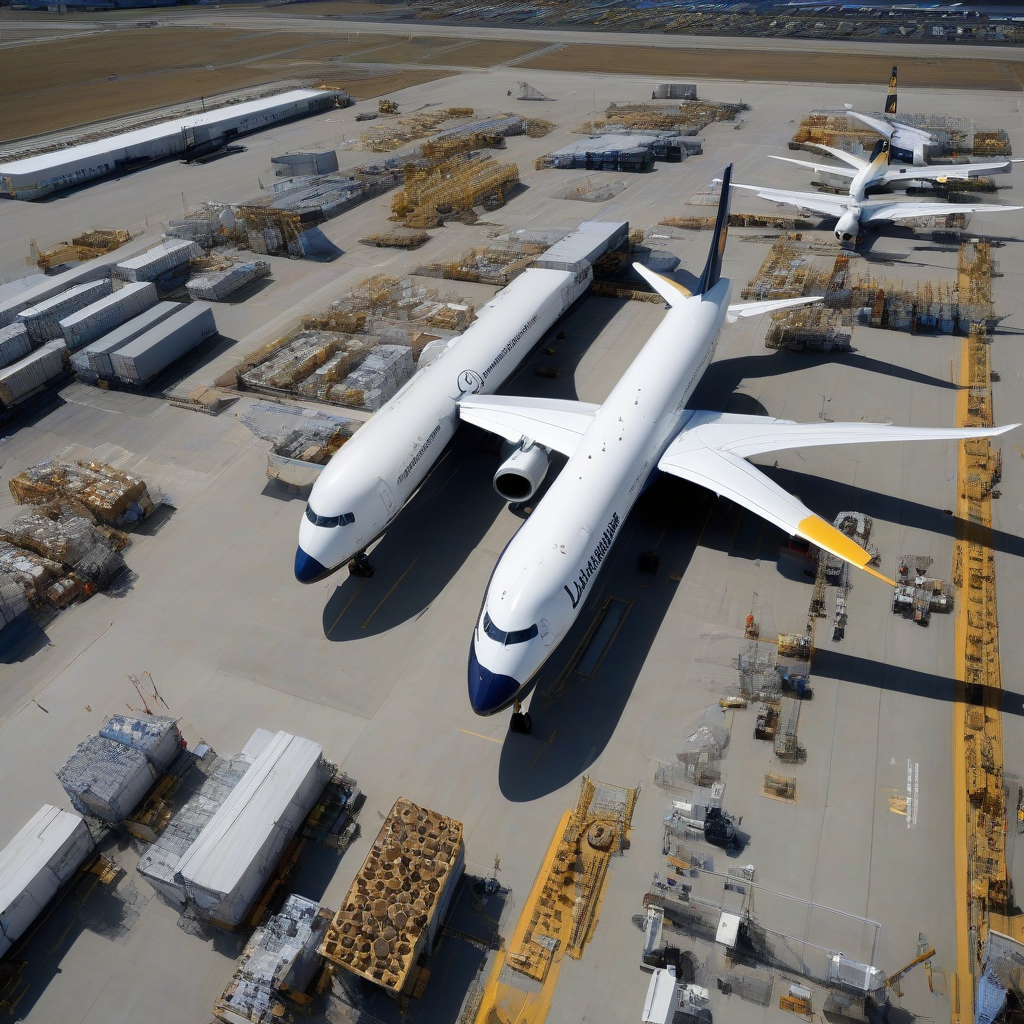
Lufthansa Cargo, the freight arm of Deutsche Lufthansa AG (FRA: LHA), achieved a 27% revenue increase during the second quarter, reaching 1 billion euros ($1.2 billion). According to FreightWaves, this growth was primarily propelled by sustained demand for shipping services within the Asian market and a surge in requirements for artificial intelligence-driven cloud infrastructure components.
Despite navigating volatile market conditions and elevated fuel expenditures linked to regional tensions, the airline posted an adjusted operating profit growth of 26%. On an adjusted basis, operating income reached $133.6 million, representing a 58% rise. Overall, the first half of the year saw revenue climb 16%, with profit margins improving by 2.2 percentage points to 10.4%.
Lufthansa Cargo currently maintains a fleet of 12 Boeing 777 freighter aircraft and leverages capacity on an additional six 777s operated by AeroLogic, a joint venture with DHL Express. Furthermore, the carrier manages belly capacity for the Lufthansa Group, including Austrian Airlines, Brussels Airlines, Discover Airlines, and SunExpress. However, the company has reportedly abandoned plans to reactivate four Airbus A321 standard-size freighters that were removed from regional service in April.
| Metric | Q2 Figure |
|---|---|
| Total Revenue | 1 billion euros ($1.2 billion) |
| Revenue Growth | 27% |
| Operating Income Growth | 26% |
| Adjusted Operating Income | $133.6 million |
| Profit Margin (H1) | 10.4% |
Lufthansa Cargo CFO Gregor Schleussner stated that the company aims to return to the top three global cargo airlines by 2030 under its "Bold Moves" strategy. Currently, the carrier ranks as the 14th largest globally by traffic volume, based on International Air Transport Association (IATA) data. The airline also benefited from capacity constraints at regional competitors like Emirates and Qatar Airways, which resulted in a 27% year-over-year increase in yields.
Why It Matters
The shift from ocean to air freight driven by geopolitical uncertainty and the urgent need for AI hardware illustrates a broader trend in supply chain management: prioritizing speed and reliability over cost. By capturing market share during periods of instability for Middle Eastern carriers, Lufthansa is demonstrating that logistics providers who control diverse fleet assets—including belly cargo—can pivot quickly to meet high-value, time-sensitive demands. This agility is becoming the primary differentiator for legacy carriers struggling to remain relevant against specialized integrators in the global e-commerce and high-tech hardware logistics segments.
Reader Discussion & Insights