
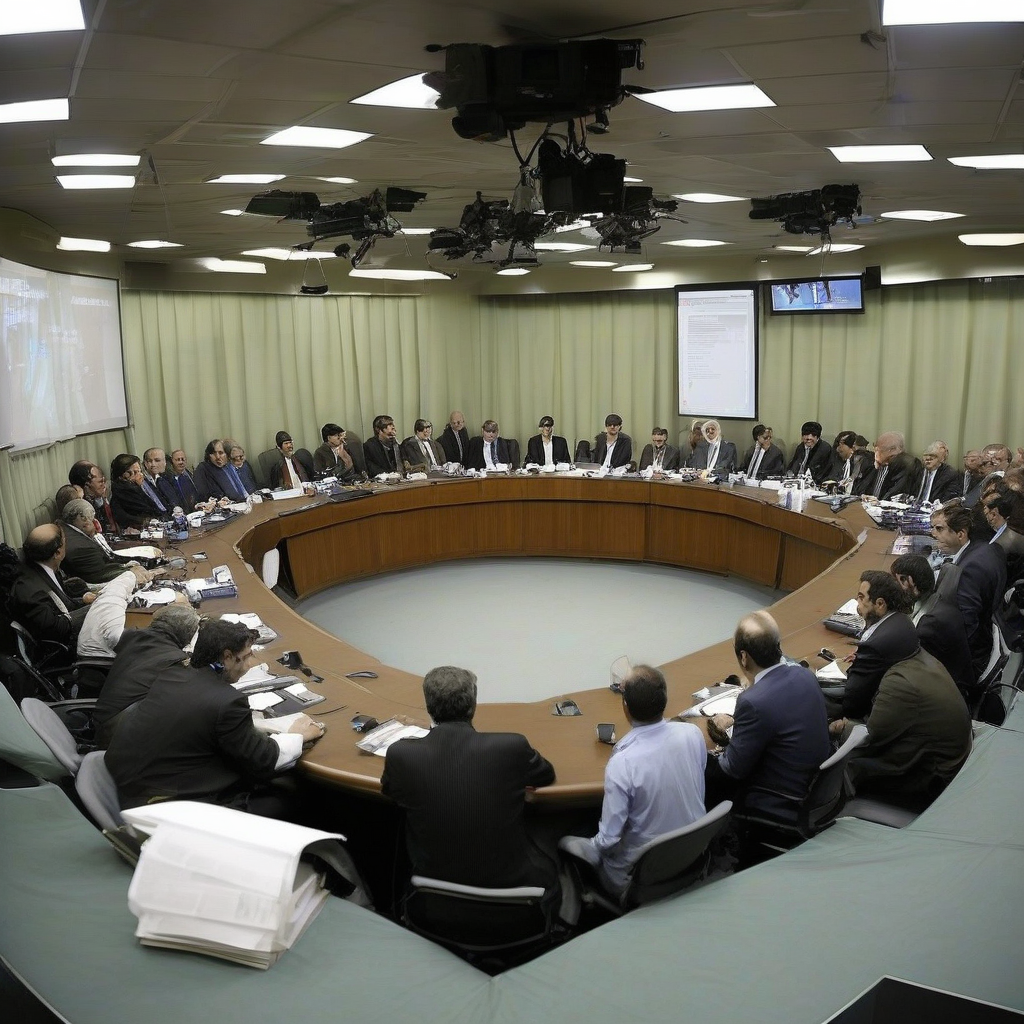
Competing political factions within the Iranian government are increasingly weaponizing the authority of Supreme Leader Mojtaba Khamenei to consolidate power and neutralize opponents, according to Fox News — World. This internal friction, characterized by conflicting reports regarding President Masokh Pezeshkian’s relationship with the new leadership, highlights a potential governance crisis following the leadership transition.
Two recent reports published by Iran International have brought these tensions to light. In the first instance, senior cleric Mohammad-Bagher Kharrazi, who maintains marital ties to the Khamenei family, asserted that President Pezeshkian had faced warnings that subsequent resignation threats would be accepted. Kharrazi attributed a direct statement to the Supreme Leader: "If he resigns one more time, I will approve it." This claim was aggressively refuted by the administration; Mehdi Tabatabaei, the president’s deputy for communications and information, dismissed the account as a "baseless and an outright lie."
In a second account, Iran International reported that Pezeshkian had a singular, limited interaction with Mojtaba Khamenei. According to unnamed sources, the meeting took place in a vehicle with tinted windows at an undisclosed location in Tehran. The encounter reportedly lasted several minutes, during which the parties could not see each other and physical contact was prohibited. The report noted that Pezeshkian subsequently expressed uncertainty regarding whether the voice he heard belonged to the Supreme Leader. This contradicts Pezeshkian’s own public statements, in which he claimed a two and a half hour meeting with Khamenei occurred in a cordial atmosphere.
| Claim Feature | Reported Details |
|---|---|
| Reported Meeting Duration | Several minutes |
| President's Public Claim | Approximately two and a half hours |
| Interaction Constraints | Tinted windows; no handshakes |
Kasra Aarabi, director of IRGC research at United Against Nuclear Iran, characterizes the current environment as an "Islamist oligarchic mafia system." According to Aarabi, the system relied on the former Supreme Leader to act as a "godfather" to arbitrate between factions. The uncertainty surrounding Mojtaba Khamenei’s active role has created a power vacuum, causing rival clans to compete for economic and political dominance rather than ideological consistency.
Why It Matters
The ambiguity surrounding Iran’s central authority creates high-stakes risks for international stability and global energy markets. In an oligarchic system where power is tied to a central arbiter, the absence of a visible leader incentivizes riskier behavior by subordinate military and intelligence factions seeking to secure their standing. For global markets, this instability suggests that official government proclamations may carry less weight than the internal mandates of competing clans, complicating diplomatic efforts and heightening the likelihood of unpredictable policy shifts regarding regional security and oil export compliance.
Reader Discussion & Insights