
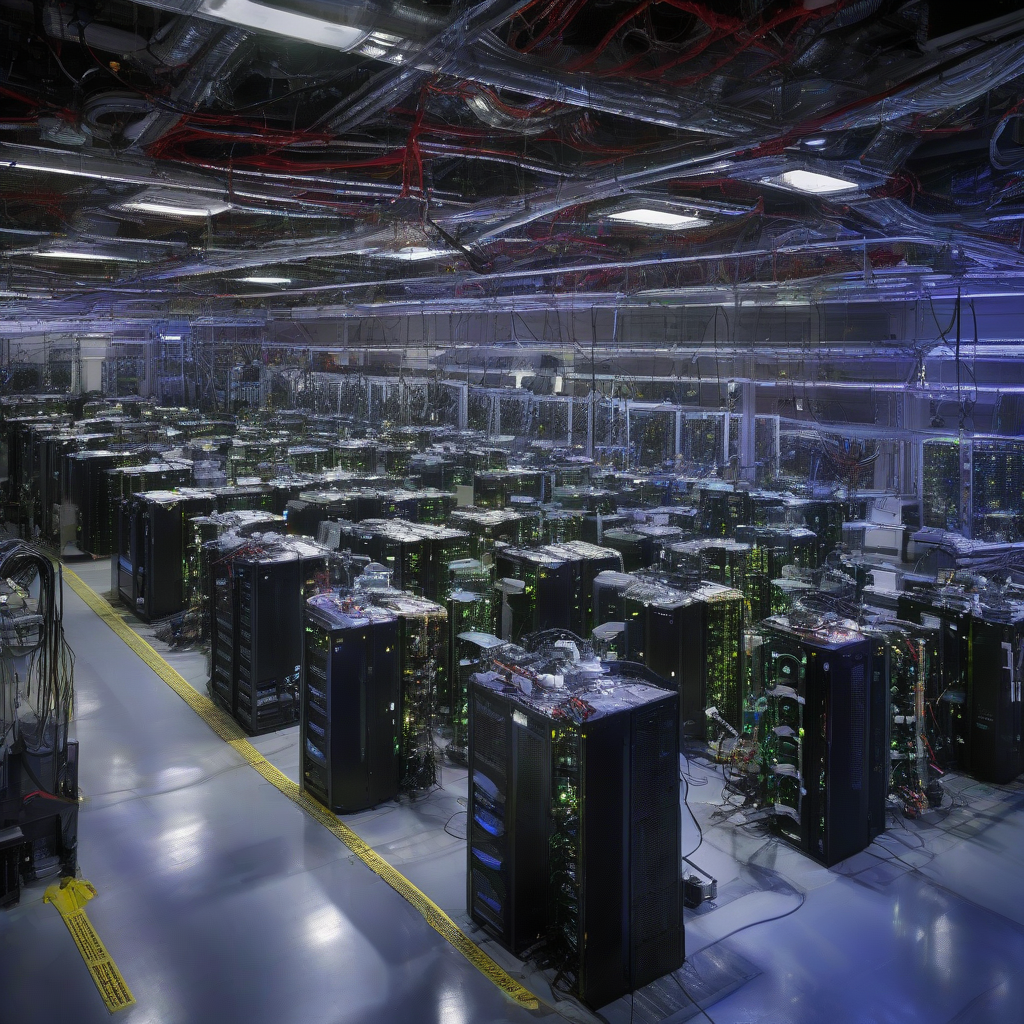

Leading hyperscalers are maintaining strong growth trajectories in their operating cash flow, according to CNBC — Technology, signaling persistent capital strength despite shifting investor expectations regarding long-term returns. While traditional metrics like free cash flow remain standard benchmarks for evaluating Big Tech performance, industry observers are increasingly looking beyond these figures to understand the nuances of how these firms manage the massive capital expenditures associated with artificial intelligence infrastructure.
Operational Performance Trends
Recent financial disclosures from the dominant players in the cloud sector suggest that operating cash flow continues to rise, driven by sustained demand for high-compute infrastructure and cloud services. While free cash flow volatility is often spotlighted in market analysis, operating cash flow provides a cleaner window into the underlying efficiency of core revenue-generating operations.
| Metric | Industry Trend | Analysis Focus |
|---|---|---|
| Operating Cash Flow | Sustained Growth | Core Revenue Efficiency |
| Capital Expenditures | Elevated Levels | AI Infrastructure Investment |
| Free Cash Flow | Variable | Long-term ROI Tracking |
Financial statements filed with the U.S. Securities and Exchange Commission (SEC) highlight that these organizations are navigating a period of intense spending. The primary tension remains balancing immediate outlays for server capacity and energy requirements against the maturation of their AI software and hardware service offerings.
Why It Matters
Beyond basic cash flow analysis, the industry is witnessing a decoupling of traditional valuation methods from AI-era capital intensity. Hyperscalers are essentially building the equivalent of an industrial power grid for the digital economy. While shareholders often fixate on free cash flow dips caused by aggressive hardware acquisitions, the consistent operating cash flow indicates that the underlying businesses remain fundamentally productive. The real risk is not a lack of liquidity, but whether the massive investments in generative AI hardware will achieve historical margin parity once the initial scale-up phase stabilizes.
Reader Discussion & Insights