
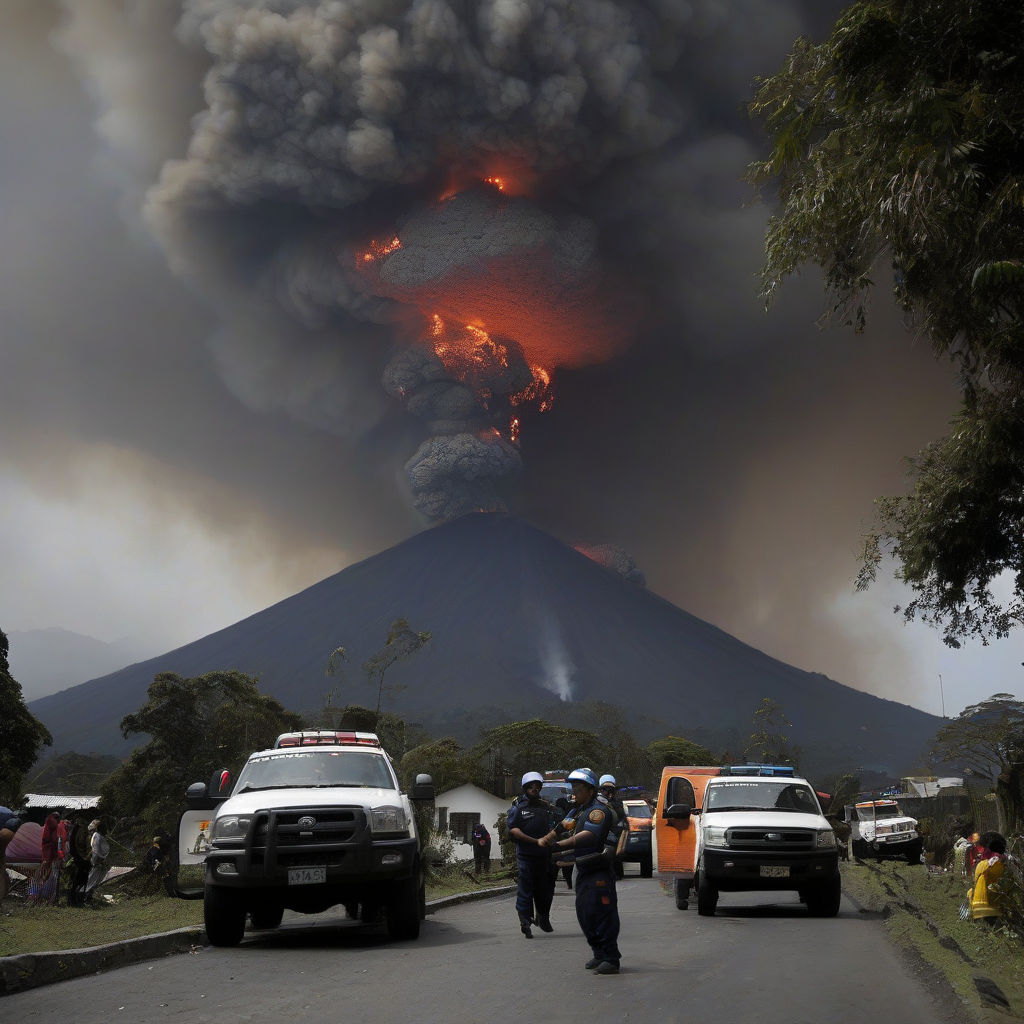
Guatemalan authorities have elevated the national alert status following a significant eruption at the Fuego volcano, which necessitated immediate evacuation procedures for surrounding communities. According to Al Jazeera, the geological event triggered the release of dense ash columns, disrupting local conditions and prompting government intervention to ensure public safety.
The Fuego volcano, historically one of the most active in Central America, exhibited sudden volcanic activity on August 4, 2026. Emergency management agencies in Guatemala are currently managing the evacuation of village populations located in the immediate path of volcanic debris and ash fallout. While official reports remain dynamic, the focus has shifted toward containment and monitoring the seismic patterns to determine the duration of the current eruptive phase.
Eruption Impact Overview
| Indicator | Status/Observation |
|---|---|
| Event Date | August 4, 2026 |
| Primary Hazard | Ash emissions & localized evacuations |
| Alert Status | Elevated/Active |
| Region | Fuego, Guatemala |
Local authorities and the National Coordinator for Disaster Reduction (CONRED) are coordinating the regional response. The proximity of residential sectors to the volcanic crater necessitates swift action to prevent respiratory complications and physical injury due to pyroclastic flows or heavy ash accumulation. International monitoring agencies are tracking the trajectory of the volcanic plume, which can affect local agricultural cycles and regional air quality.
Why It Matters
Volcanic activity at Fuego presents a persistent challenge for regional infrastructure and supply chain continuity in Guatemala. Beyond the immediate humanitarian necessity of displacement, such eruptions disrupt agricultural exports—a pillar of the local economy—and complicate logistics for regional transport networks. Frequent volcanic events necessitate high-level interagency cooperation between geological research institutes and emergency response teams to minimize economic stagnation. The ability to forecast these eruptions efficiently is essential for protecting the long-term viability of communities situated near active geological features, as chronic displacement often leads to broader socio-economic destabilization.
Reader Discussion & Insights