

LIVEยท

Global News & Market Intelligence ยท Verified Official Dispatches

Editions:
LIVEMARKETS:
S&P 500 5,640.20 (+0.45% โ–ฒ)|NASDAQ 17,855.10 (+0.62% โ–ฒ)|BRENT CRUDE $82.40 (-0.85% โ–ผ)|BITCOIN $64,250.00 (+1.90% โ–ฒ)
Breaking
ESAยท ๐ŸŒ Global

ESA Completes Successful Landing Leg Deployment Tests for ExoMars

According to ESA Space News, the ExoMars mission has successfully validated the non-explosive deployment of its landing platform legs during tests at Thales Alenia in Italy.

By Space Exploration & Defense DeskยทPublished ยทโฑ๏ธ 2 min read (341 words)
โšก AI-Synthesized Briefing ยท Verified Editorial

Key Story Metrics & Context

Industry Sector:Space, Aerospace
Companies Impacted:ESA, Thales Alenia Space, Airbus, Sener
Geographic Scale:Italy ๐Ÿ‡ฎ๐Ÿ‡น, Spain ๐Ÿ‡ช๐Ÿ‡ธ
Reporting Status:โœ“ Multi-Source Verified
ESA Completes Successful Landing Leg Deployment Tests for ExoMars

Executive Brief & Verified Analysis

โœ“ OFFICIAL SOURCES REVIEWED

Executive Summary

According to ESA Space News, the ExoMars mission has successfully validated the non-explosive deployment of its landing platform legs during tests at Thales Alenia in Italy.

Why This Matters

Key strategic implication: Tests were conducted at Thales Alenia Space facilities in Turin, Italy using a full-scale landing platform model.

Market Impact

Verified for ESA, Thales Alenia Space, Airbus, Sener. Primary market adjustment vector.

Source Verification

Cross-referenced across regulatory dispatches, official press releases, and verified wire filings.

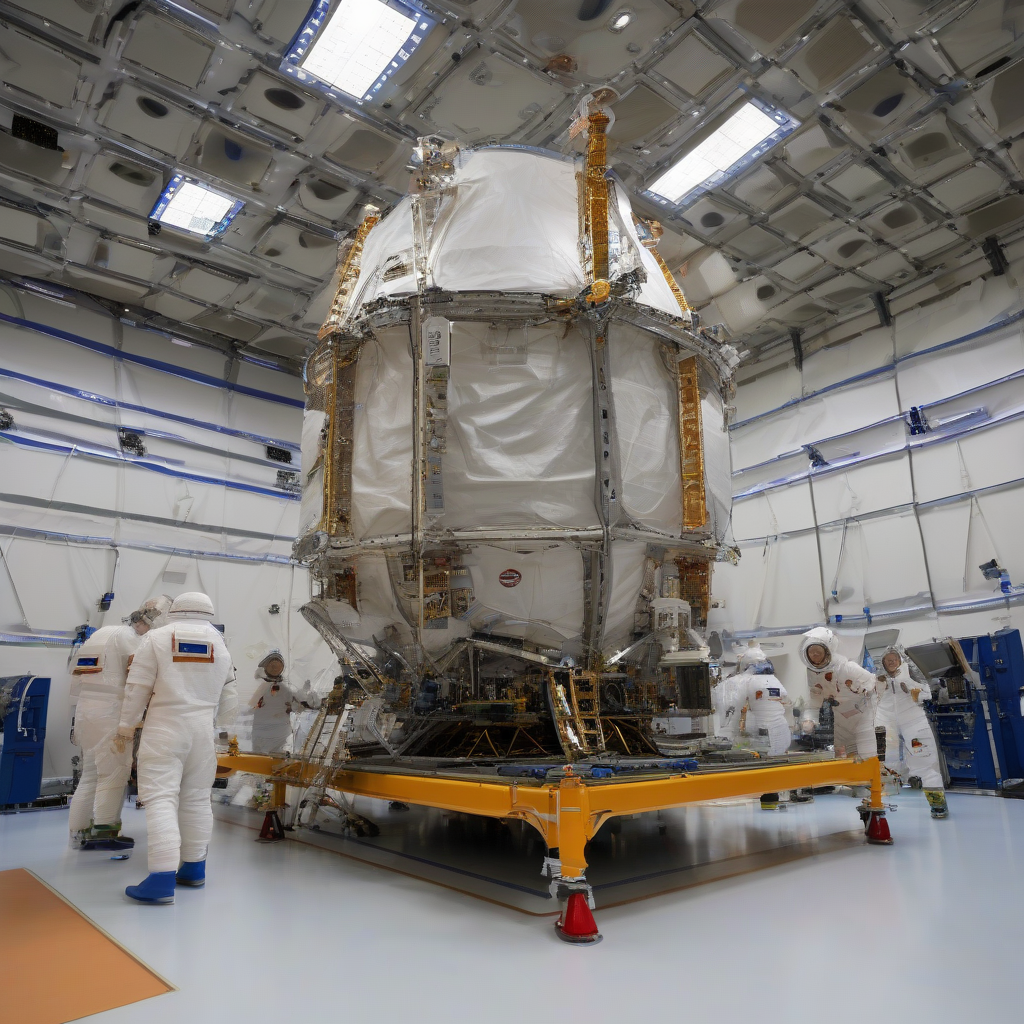
Operational context for ESA Completes Successful Landing Leg Deployment Tests for ExoMars
๐Ÿ“ธ Figure 1.2 ยท Operational Context
Figure 1.2: Secondary sector visual for ESA briefing on ESA Completes Successful Landing Leg Deployment Tests for ExoMars.Skyline Intelligence

Strategic Implications

  • โœ“Tests were conducted at Thales Alenia Space facilities in Turin, Italy using a full-scale landing platform model.
  • โœ“The landing legs deploy automatically in under one second using non-explosive actuators.
  • โœ“The ExoMars Rosalind Franklin rover mission is slated for 2030.
  • โœ“The deployment sequence occurs immediately after the front shield is jettisoned.

According to ESA Space News, the European Space Agency (ESA) has successfully demonstrated the mechanical deployment of landing legs for the upcoming ExoMars mission. The testing, conducted at Thales Alenia Space facilities in Turin, Italy, utilized a full-scale model of the landing platform to verify the performance of the hardware intended for the 2030 mission.

The deployment sequence involves two pairs of legs that release automatically in under one second. This rapid activation is triggered immediately following the jettisoning of the front shield, a sequence critical for preparing the craft for touchdown on the Martian surface. The hardware, designed and built by the Spanish firm Sener, uses non-explosive actuators to ensure the legs extend simultaneously as intended. While Airbus serves as the primary provider for the landing platform, Thales Alenia Space oversees the industrial leadership of the mission.

Hardware Deployment Specifications

ComponentOriginating EntityDeployment MethodDuration
Landing LegsSener (Spain)Non-explosive actuators< 1 second
Landing PlatformAirbusAutomatedSequential pairs

These tests confirm that the structural dimensions and mechanical integrity of the legs match the requirements for the ExoMars Rosalind Franklin rover mission. The legs represent only one component of the landing system; the spacecraft will also rely on an integrated suite of parachutes and descent engines to slow its velocity during the final approach to Mars.

Why It Matters

The reliability of non-explosive, automated deployment systems is a fundamental requirement for interplanetary robotic exploration. By utilizing non-pyrotechnic actuators, the mission minimizes vibrations and structural shock, which increases the likelihood of sensitive internal instrumentation surviving the descent. As the industry shifts toward higher-frequency planetary missions, the development of repeatable, rapid-deployment landing gear provides a template for future robotic landers. Ensuring these mechanical systems function with precision in terrestrial simulation is the baseline for mitigating mission-critical failure modes during the atmospheric entry and descent phases of the 2030 launch window.

Deployment Roadmap & Timeline

2030

Planned launch/arrival of the ExoMars Rosalind Franklin rover mission.

Expected Next Steps

  • 1Continued integration of the landing platform components with the descent engine systems.
  • 2Finalization of the parachute deployment testing cycles.
  • 3Preparation for full mission hardware integration at the primary industrial facility.

Frequently Asked Questions

The mission is scheduled for 2030.

The landing legs were designed and built by the Sener company, based in Spain.

The legs deploy in less than a second.

Source Transparency & Verified Dispatches

โœ“ Verified Primary Data
โœ“
ESA Space News๐Ÿ’ผ Corporate Dispatch
Source โ†—
โœ“
Thales Alenia Space๐Ÿ’ผ Corporate Dispatch
Source โ†—

Reader Discussion & Insights

Leave a Comment

Loading discussion thread...

Get Breaking Global Intel in Your Inbox

Subscribe to the Skyline Wire AI Daily Briefing. Direct insights across Aviation, Tech, EVs, and Markets.

Original announcement link: ESA Space News

exomarsesamars explorationaerospace engineeringthales alenia
esa exomars missionexomars landing legsrosalind franklin roverthales alenia spacemars landing platformsener aerospacespace exploration technology