
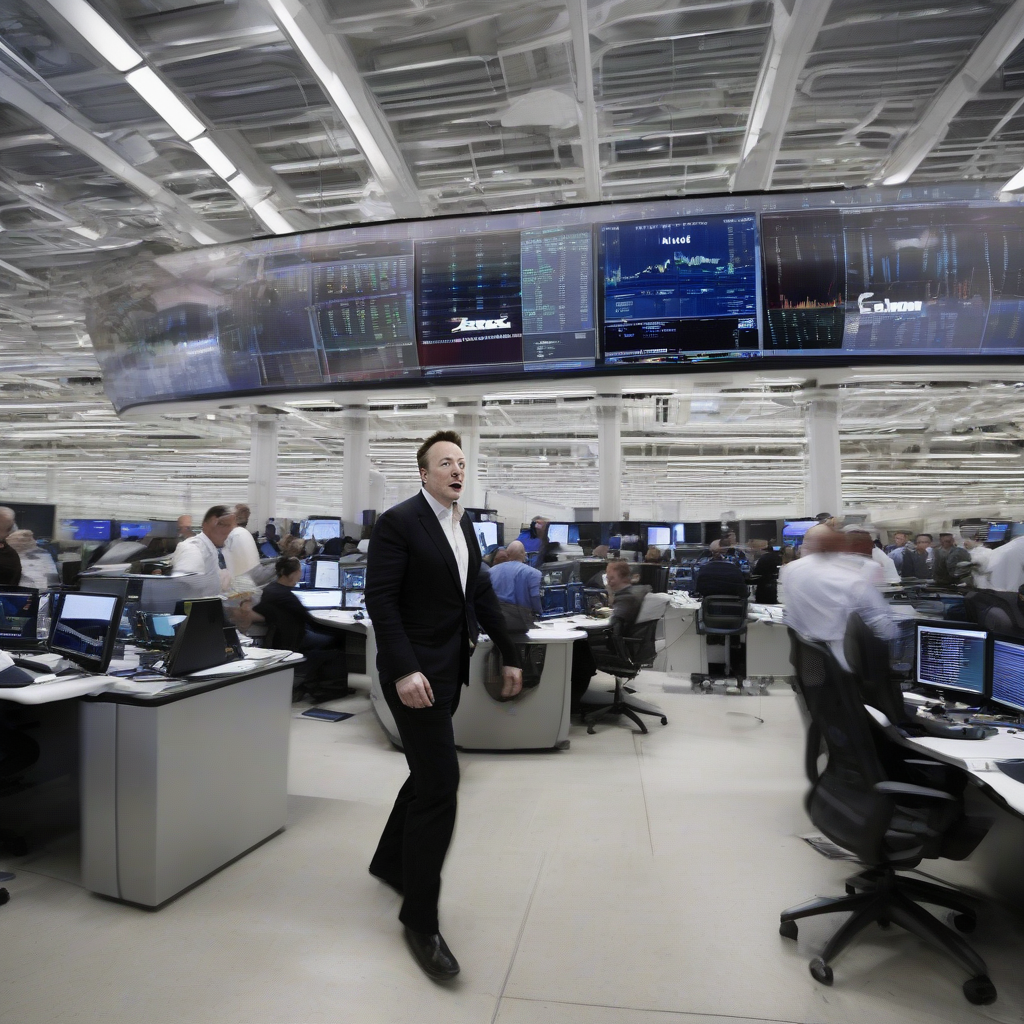
Elon Musk issued a second public warning to SpaceX short sellers on Tuesday, just hours before the company prepared to release its inaugural quarterly earnings report as a publicly traded firm, according to Teslarati. Responding to a report regarding elevated short interest, Musk stated on X that he had attempted to warn those betting against the company, only to see them double down on their positions.
Data provided by S3 Partners indicates that approximately 95 percent of available SPCX shares are currently on loan, representing about 34 percent short interest as a percentage of the float. The stock has faced consistent downward pressure since its IPO in June 2026, dropping from its initial valuation peaks. This recent warning follows a similar message sent on July 17, when Musk claimed the survival probability for investors maintaining significant short positions in SpaceX is very low. At that time, SPCX had declined roughly 30 percent from a peak valuation exceeding $2.6 trillion, with short sellers previously recording gains of about $8.7 billion.
| Metric | Value |
|---|---|
| Available SPCX shares on loan | 95% |
| Total short interest as % of float | 34% |
| Peak valuation prior to July 17 | >$2.6 trillion |
| Short seller gains reported July 17 | $8.7 billion |
| Projected Q2 revenue | $6.9 billion |
SpaceX is expected to release its second-quarter financial results after market close today. Analysts are projecting revenue near $6.9 billion, driven by performance in the Starlink, launch services, and AI-related business segments. This earnings disclosure occurs immediately before a significant lockup expiration scheduled for August 6, which may release hundreds of millions of insider shares into the public market.
Why It Matters
The public market debut of SpaceX represents a shift in how capital-intensive aerospace firms are valued. By exposing its financials to public scrutiny, the company invites a new layer of volatility that contrasts with its previous private-sector insulation. The tension between Musk’s long-term vision—which includes asteroid mining, orbital solar power, and Mars colonization—and the short-term financial expectations of public shareholders creates a unique market dynamic. Investors are now forced to reconcile high-growth, long-horizon infrastructure projects with quarterly performance metrics, a conflict that will define the firm's trading behavior throughout its tenure as a public entity.
Reader Discussion & Insights