
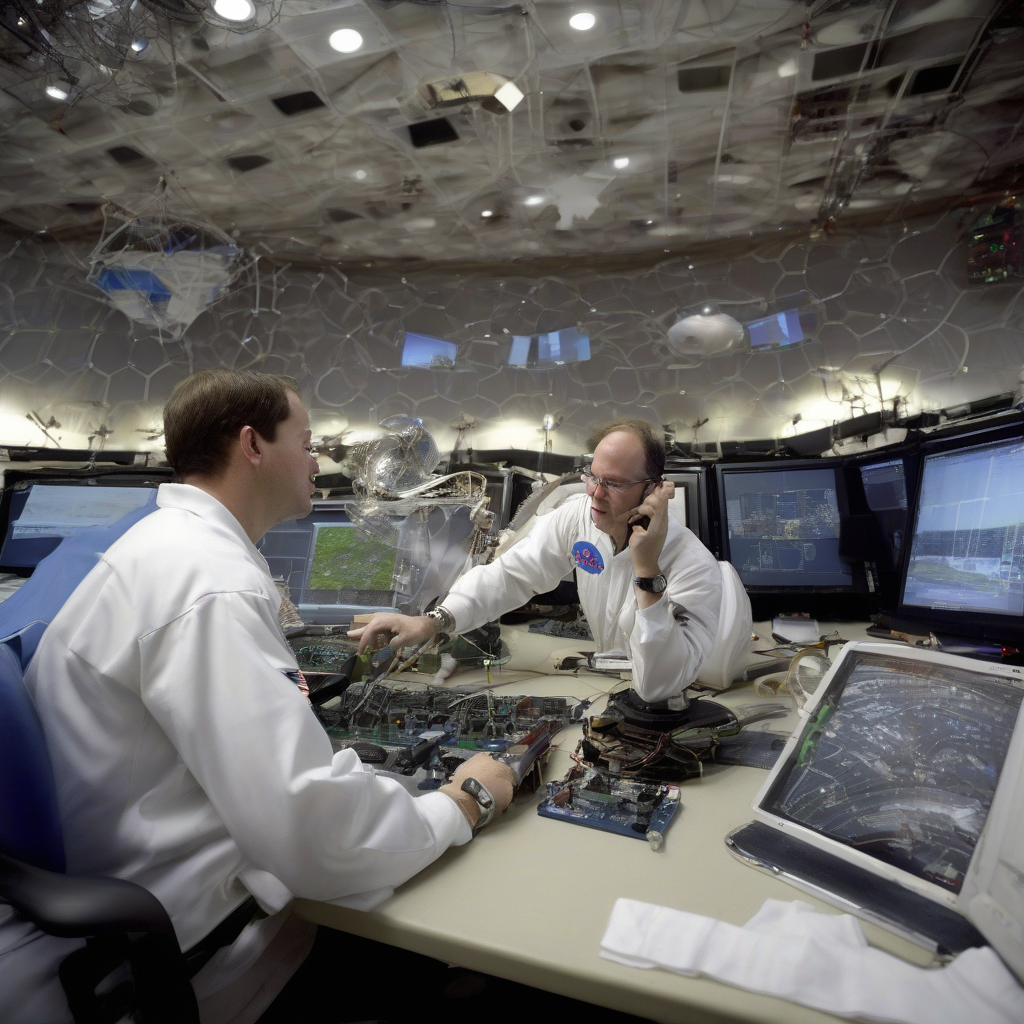

According to NASA News Releases, the Cosmic Storytelling with NASA Data (CosmicDS) project convened a group of 13 educators at the Center for Astrophysics | Harvard & Smithsonian (CfA) in Cambridge, Massachusetts. The event, held from July 27–29, 2026, served as a Leadership Institute for the Smithsonian Institution’s Breathing Easier: Supporting Teen Air Quality Investigations (BEST AQI) initiative.
The project, which is led by Harvard University, provides educators with direct access to sophisticated data sets for classroom application. During the first day of the Institute, Principal Investigator Pat Udomprasert introduced participants to the TEMPO-Lab. This tool, developed with funding from the NASA Science Activation Program, allows for the exploration and analysis of near-real-time atmospheric data collected by the Tropospheric Emissions: Monitoring of Pollution (TEMPO) mission. The TEMPO mission is notable for its capability to measure pollution across North America on an hourly basis during daylight hours.
Over the course of the final two days, attendees focused on curriculum development, utilizing the TEMPO-Lab to build case studies regarding various environmental stressors, such as wildfire smoke, power plant emissions, agricultural runoff, and rush-hour traffic. A significant highlight occurred when scientist Heesung Chong announced the availability of a new beta-version ground-level ozone data product. Software developer John Lewis was able to integrate this new information into the tool overnight, allowing educators to conduct live data analysis the following morning.
Data Utilization Summary
| Item | Detail |
|---|---|
| Event Dates | July 27–29, 2026 |
| Location | Center for Astrophysics |
| Participants | 13 Educators |
| Mission Focus | TEMPO (Tropospheric Emissions: Monitoring of Pollution) |
| Tool Name | TEMPO-Lab |
Why It Matters
The integration of near-real-time satellite data into localized educational frameworks marks a shift in how atmospheric science is communicated to the public. By enabling rapid data updates—as demonstrated by the overnight integration of the beta ozone product—NASA is moving toward a model of 'active science' access. This democratizes technical information, allowing non-specialists to participate in environmental monitoring. For industrial sectors, this suggests that granular, public-facing pollution data may lead to increased scrutiny of localized emission sources, potentially influencing community-led advocacy and local policy adjustments regarding air quality standards.
Reader Discussion & Insights