
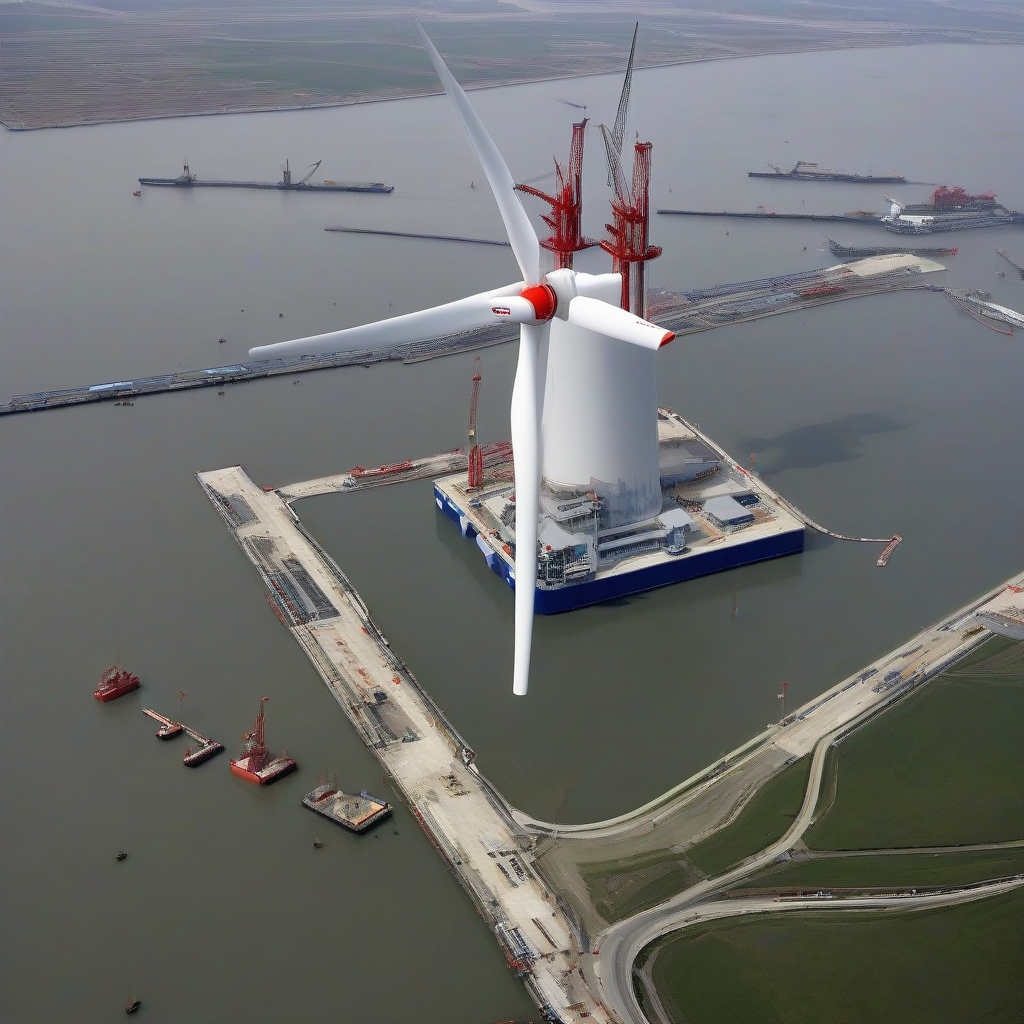

China National Offshore Oil Corporation (CNOOC) has officially commenced operations of the world’s first 16-megawatt tension-leg platform (TLP) floating wind turbine. According to OilPrice.com, the installation is designed to supply renewable electricity directly to an active offshore oilfield, integrating wind energy with traditional extraction infrastructure.
The project features the Haiyou Anlan, a specialized floating wind power platform engineered for deep-water deployment. The unit is connected to the Lufeng Oilfield grid via a 4.3-kilometer-long (2.7 miles) subsea cable. This connection enables the wind farm to provide consistent energy to the oilfield’s operations, a strategy CNOOC is pursuing to reduce the carbon footprint of its offshore assets.
Technical Specifications
| Feature | Specification |
|---|---|
| Capacity | 16-megawatt |
| Platform Type | Tension-Leg Platform (TLP) |
| Connection Distance | 4.3-kilometer (2.7 miles) |
| Primary Energy Destination | Lufeng Oilfield grid |
As one of the largest state-owned oil producers in China, CNOOC has prioritized the development of offshore technology to maintain energy output while testing new power generation methods. The utilization of a TLP structure is significant, as it offers superior stability in harsher, deeper offshore environments compared to traditional floating foundations. The project represents a technical shift in how oil and gas companies handle localized grid requirements for remote, sea-based facilities.
Why It Matters
The integration of massive floating turbines directly into oilfield grids signals a shift in corporate decarbonization strategies. By moving power generation closer to the consumption site, operators avoid the transmission losses associated with long-range cables from onshore grids. For the oil and gas sector, this provides a pathway to lower Scope 1 and 2 emissions without sacrificing operational uptime. If the Haiyou Anlan proves commercially viable and durable under extreme weather, it may force international energy competitors to adopt similar integrated renewable models to meet strict carbon reporting mandates in the coming decade.
Reader Discussion & Insights