
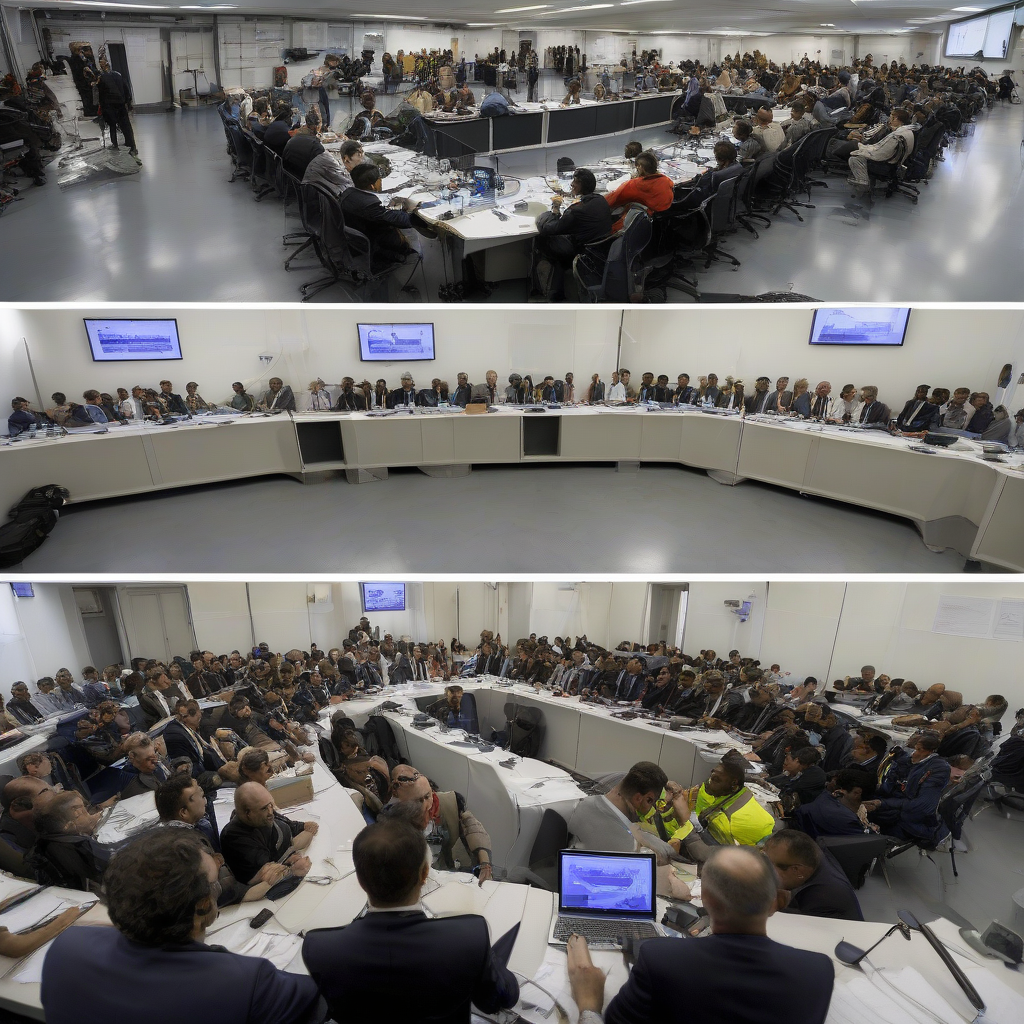

Between 3,000 and 5,000 migrants currently remain within the Spanish enclave of Ceuta following a chaotic influx late last month, according to Fox News — World. During an extraordinary session held by the European Parliament’s Committee on Civil Liberties, Justice and Home Affairs, Ceuta President Juan Jesus Vivas stated that the territory continues to grapple with the aftermath of a massive surge that occurred between July 30 and July 31.
According to local authorities, roughly 80,000 people entered the territory within a 48-hour window. Vivas characterized the event as an "abnormal or irregular occupation" of the city. While roughly 75,000 of those who crossed the border have since returned to Morocco, the remaining population of migrants continues to place a heavy strain on the city’s resources. Vivas reported that approximately 100 people died during the attempt to enter the enclave.
The administrative impact on the city is significant. The reception centers designated for both adult and minor migrants are currently experiencing a total collapse of operations. Vivas indicated that the continued presence of these individuals creates ongoing disruptions to public order and raises concerns regarding the physical security of the region.
Impact Statistics
| Category | Figure |
|---|---|
| Total estimated surge (48-hour window) | 80,000 |
| Migrants returned to Morocco | 75,000 |
| Migrants remaining in Ceuta | 3,000 to 5,000 |
| Estimated deaths reported | 100 |
In his address to the European Parliament, Vivas explicitly called for a change in strategy, requesting that authorities facilitate the expulsion of the remaining migrants. He also urged for a new economic model for the city that centers on increased integration with both Spain and Europe. The President of the Government of Spain and European Commission President Ursula von der Leyen have both previously acknowledged the severity of the incident, describing the influx as a violation of territorial integrity.
Why It Matters
This border crisis highlights the precarious logistical and humanitarian challenges faced by territories situated on the geographic periphery of the European Union. The collapse of local reception infrastructure demonstrates the limitations of current inter-governmental protocols when managing sudden, high-volume human migration. Furthermore, the reliance on third-party cooperation—specifically regarding border security—exposes the complex geopolitical dependencies that govern European territorial integrity. The situation in Ceuta serves as a case study for the urgent need to re-evaluate regional resource allocation and the diplomatic frameworks currently governing migration management in border-sensitive trade and transit corridors.
Reader Discussion & Insights