
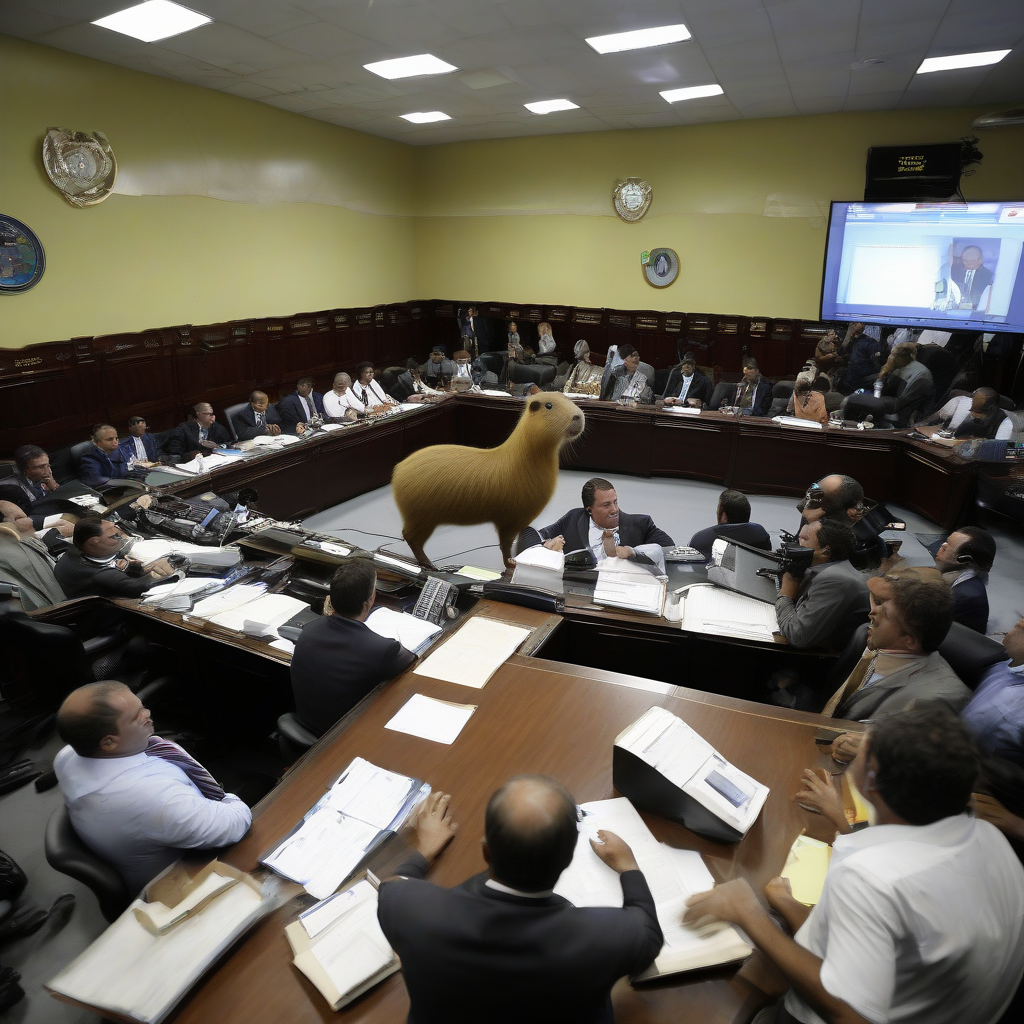
Legislators in Brazil experienced an unusual interruption to their official duties when a group of capybaras entered the Mato Grosso Legislative Assembly in Cuiabá on July 30. According to Fox News — World, the animals wandered into the government building, temporarily halting proceedings as staff worked to escort the visitors back outside.
Video documentation provided by legislative employee Nayara Bueno captured the mammals navigating the entrance of the facility. Despite the sudden appearance of the wildlife, officials confirmed that the encounter resulted in no structural damage to the Mato Grosso state legislature. Bueno noted that such occurrences are not uncommon for the staff, as the building's proximity to a local park facilitates frequent interactions with the native fauna.
| Feature | Detail |
|---|---|
| Date of Incident | July 30 |
| Location | Mato Grosso Legislative Assembly, Cuiabá |
| Species | Capybara |
| Maximum Weight | Approximately 175 pounds |
Capybaras are indigenous to South America and are recognized as the largest living rodents globally. They are classified as semiaquatic mammals, typically inhabiting areas adjacent to wetlands and various water bodies. These animals are highly social, frequently observed moving in groups, and can attain weights reaching 175 pounds. The legislature's location, which directly borders a park, serves as the primary route for the animals to enter the complex.
Why It Matters
The presence of wildlife in urban government infrastructure highlights the ongoing challenge of managing human-wildlife interface zones in rapidly developing regions. While the Mato Grosso incident was benign, it underscores the necessity for legislative bodies to balance environmental preservation with the maintenance of secure, uninterrupted government workspaces. From an administrative perspective, the event demonstrates how environmental design decisions—such as proximity to parklands—directly influence the operational environment of public institutions, necessitating specialized facility management protocols to protect both staff and the local ecosystem.
Reader Discussion & Insights