
LIVEยท

Global News & Market Intelligence ยท Verified Official Dispatches

Editions:
LIVEMARKETS:
S&P 500 5,640.20 (+0.45% โ–ฒ)|NASDAQ 17,855.10 (+0.62% โ–ฒ)|BRENT CRUDE $82.40 (-0.85% โ–ผ)|BITCOIN $64,250.00 (+1.90% โ–ฒ)
Breaking
Artificial Intelligenceยท ๐ŸŒ Global

Ancient Fossil Site in Canada Challenges Animal Evolution Timeline

A discovery in Canada of 567-million-year-old fossils indicates complex animal life emerged 10 million years earlier than previously documented, according to ScienceDaily.

By Technology & AI Intelligence DeskยทPublished ยทโฑ๏ธ 1 min read (279 words)
โšก AI-Synthesized Briefing ยท Verified Editorial

Key Story Metrics & Context

Industry Sector:Technology
Companies Impacted:Global Holdings
Geographic Scale:Canada ๐Ÿ‡จ๐Ÿ‡ฆ
Reporting Status:โœ“ Multi-Source Verified
Ancient Fossil Site in Canada Challenges Animal Evolution Timeline

Executive Brief & Verified Analysis

โœ“ OFFICIAL SOURCES REVIEWED

Executive Summary

A discovery in Canada of 567-million-year-old fossils indicates complex animal life emerged 10 million years earlier than previously documented, according to ScienceDaily.

Why This Matters

Key strategic implication: The fossil site contains remains dating back 567 million years.

Market Impact

Verified for Global Holdings. Primary market adjustment vector.

Source Verification

Cross-referenced across regulatory dispatches, official press releases, and verified wire filings.

Operational context for Ancient Fossil Site in Canada Challenges Animal Evolution Timeline
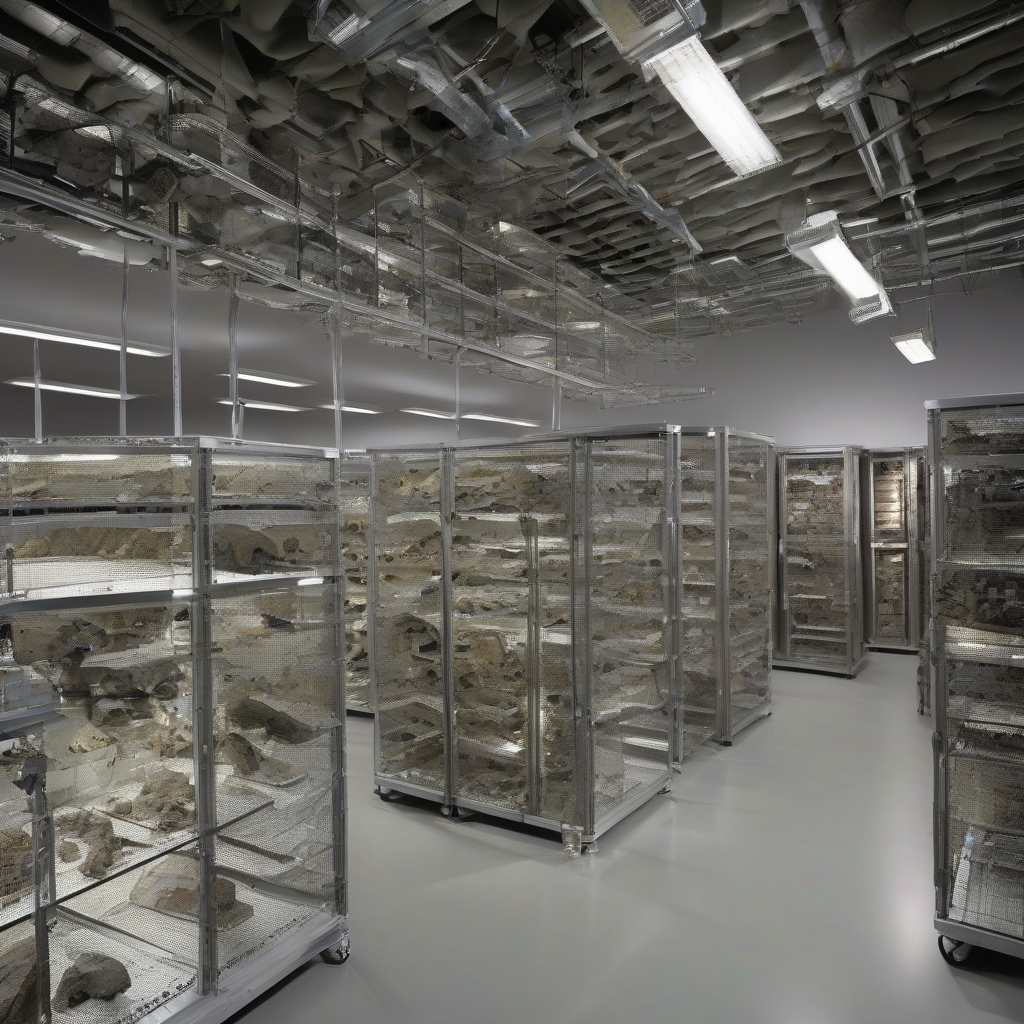
๐Ÿ“ธ Figure 1.2 ยท Operational Context
Figure 1.2: Secondary sector visual for Artificial Intelligence briefing on Ancient Fossil Site in Canada Challenges Animal Evolution Timeline.Skyline Intelligence

Strategic Implications

  • โœ“The fossil site contains remains dating back 567 million years.
  • โœ“The discovery moves the timeline for complex animal life back by 10 million years.
  • โœ“Early creatures identified show evidence of sexual reproduction and organized body plans.

Researchers have identified a fossilized site in Canada containing creatures dating back 567 million years, providing evidence that complex animal behavior, including mobility and sexual reproduction, surfaced earlier than previously understood. According to ScienceDaily, these findings challenge established scientific consensus by pushing back key evolutionary milestones by as much as 10 million years.

The remains suggest that these organisms possessed organized body plans and the capacity for locomotion, characteristics typically associated with later evolutionary periods. The data indicates that the deep ocean environment served as a primary location for the early proliferation of such life forms.

Fossil Site Data Summary

AttributeSpecification
Fossil Age567 million years
Evolutionary Shift10 million years earlier
Primary HabitatDeep ocean

This discovery highlights the necessity of reassessing the timeline of biological complexity during the Ediacaran period. By identifying specimens capable of reproduction and structured movement at this historical depth, scientists can better calibrate the trajectory of multicellular development.

Why It Matters

The ability to date evolutionary milestones with greater accuracy serves as a foundational element for deep-time biological modeling. In the context of technology, these findings provide data points for evolutionary computing and synthetic biology, where algorithms mimic biological processes to solve complex optimization problems. Understanding the precise origins of complex behavior allows researchers to develop more reliable simulations for autonomous systems. By mapping the exact timeline of when life began to exhibit coordinated movement and internal organization, industry analysts can better predict how biological blueprints might influence the next generation of biomimetic engineering and machine learning architectures.

Expected Next Steps

  • 1Analyze additional specimens from the Canadian site to confirm anatomical structures.
  • 2Compare isotopic data with other global fossil sites to refine the 10-million-year shift.
  • 3Develop new computer models to simulate deep-ocean biological development.

Frequently Asked Questions

The fossils are 567 million years old.

The discovery shifts key evolutionary milestones back by up to 10 million years.

The fossils suggest these creatures were capable of movement, sexual reproduction, and had recognizable body plans.

Source Transparency & Verified Dispatches

โœ“ Verified Primary Data
โœ“
ScienceDaily๐Ÿ’ผ Corporate Dispatch
Source โ†—

Reader Discussion & Insights

Leave a Comment

Loading discussion thread...

Get Breaking Global Intel in Your Inbox

Subscribe to the Skyline Wire AI Daily Briefing. Direct insights across Aviation, Tech, EVs, and Markets.

Original announcement link: ScienceDaily

paleontologyevolutionary-biologycanada-sciencefossil-discoveryediacaran
567-million-year-old fossilsevolutionary milestonesearly animal lifedeep ocean evolutionary researchcomplex animal behavior