
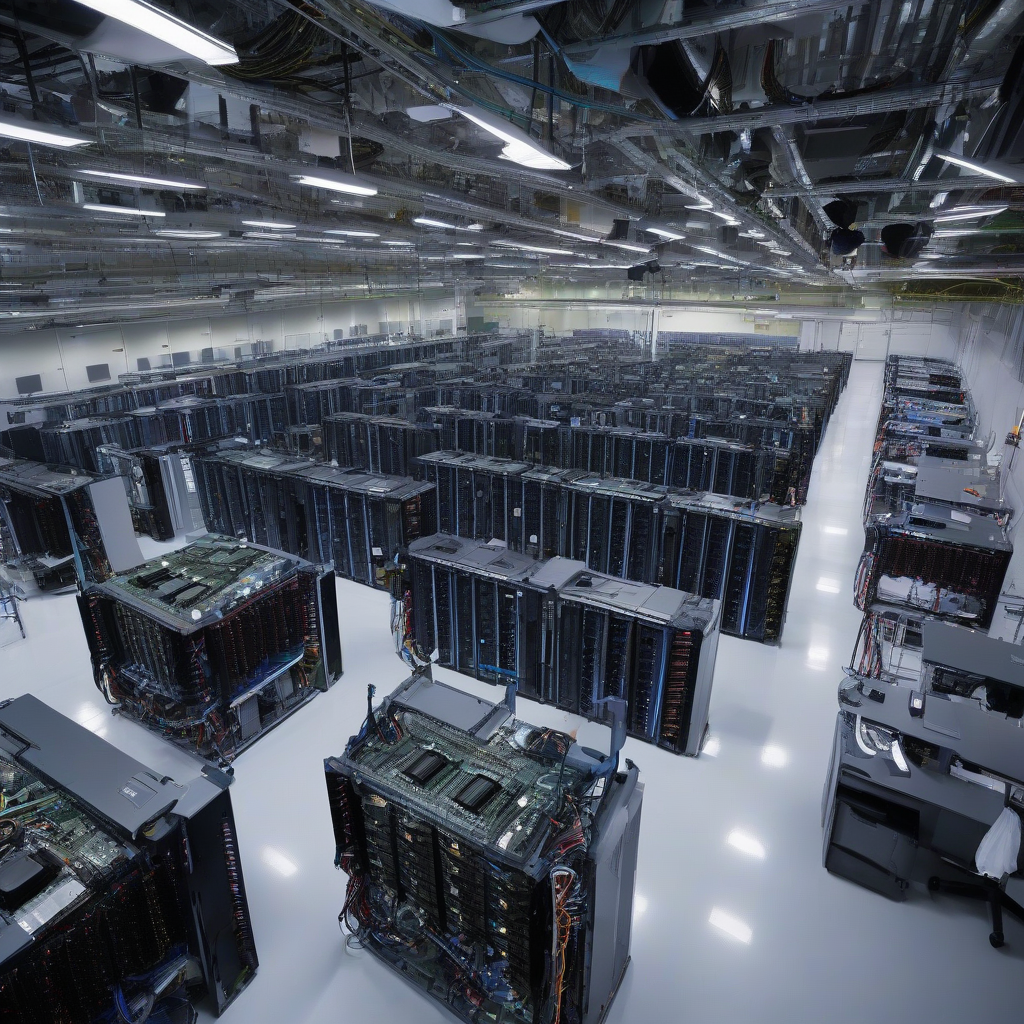
AMD has released its financial results for the second quarter of 2026, providing a detailed look at the company’s performance across its core hardware and artificial intelligence divisions. According to The Verge, the company continues to manage the balance between strong demand in enterprise AI infrastructure and cooling consumer interest in high-end gaming hardware.
Financial and Operational Performance
The Q2 2026 report indicates a bifurcated reality for the semiconductor manufacturer. While investments in data center operations remain high, the gaming sector has experienced the anticipated market normalization following years of pandemic-era growth. The following table summarizes the key performance indicators mentioned in the report:
| Segment | Q2 2026 Performance Metric |
|---|---|
| Data Center AI | High sustained demand |
| Gaming Revenue | Year-over-year decline |
| Ryzen Processors | Stable market adoption |
Management has noted that while AI remains the primary catalyst for growth, the broader macroeconomic environment continues to influence consumer purchasing habits regarding standalone gaming GPUs. The company’s focus remains on high-margin enterprise products, a strategy that aligns with recent SEC filings regarding their long-term growth trajectory.
Market Position and Regulatory Context
AMD’s performance is monitored closely by financial analysts tracking the global semiconductor shortage recovery and trade policy impacts. As the firm navigates supply chain pressures, it maintains competitive pressure on incumbents in the server and workstation space. The emphasis on Ryzen architecture demonstrates a defensive posture to retain market share against rival x86 platforms while aggressively expanding into AI-capable hardware.
Why It Matters
AMD's Q2 2026 results serve as a barometer for the semiconductor industry's transition from general-purpose computing to specialized AI acceleration. As enterprise budgets pivot heavily toward training large language models, consumer hardware manufacturers face a precarious reality where traditional gaming revenue no longer serves as a reliable growth engine. This shift suggests that the 'PC gaming boom' era has definitively ended, forcing hardware firms to tether their survival to enterprise-level spending. Investors should observe how these companies manage R&D costs when high-margin data center projects hit a ceiling of saturation.
Reader Discussion & Insights